Threads Of Discipline - Martial Elegance
武の装いの美学
The Threads of Elegance
Clothing, Dress, and Presentation
Before technique is seen, appearance is seen.
Clothing is not decoration — it is part of the discipline.
序章 – Introduction
In traditional Japanese martial arts, clothing is not merely practical. It shapes posture, movement, and presentation. The way a practitioner wears their clothing reflects discipline, attention to detail, and respect for the art.
Clothing influences posture, movement, awareness, etiquette, presentation, and discipline.
The uniform is the first discipline.
着装の順序 – The Layers of Clothing
The order of clothing is important.
First, the undergarment (shitagi) is worn to absorb sweat.
Second, the gi jacket (uwagi) is worn as the main jacket.
Third, the trousers are put on to allow free movement.
Fourth, the obi (belt) is tied to support the sword and the lower back.
Fifth, the hakama is worn to protect the legs and support movement.
Sixth, tabi are worn for correct footwork, especially on indoor floors.
着装の寸法 – Sizing the Gi and Hakama
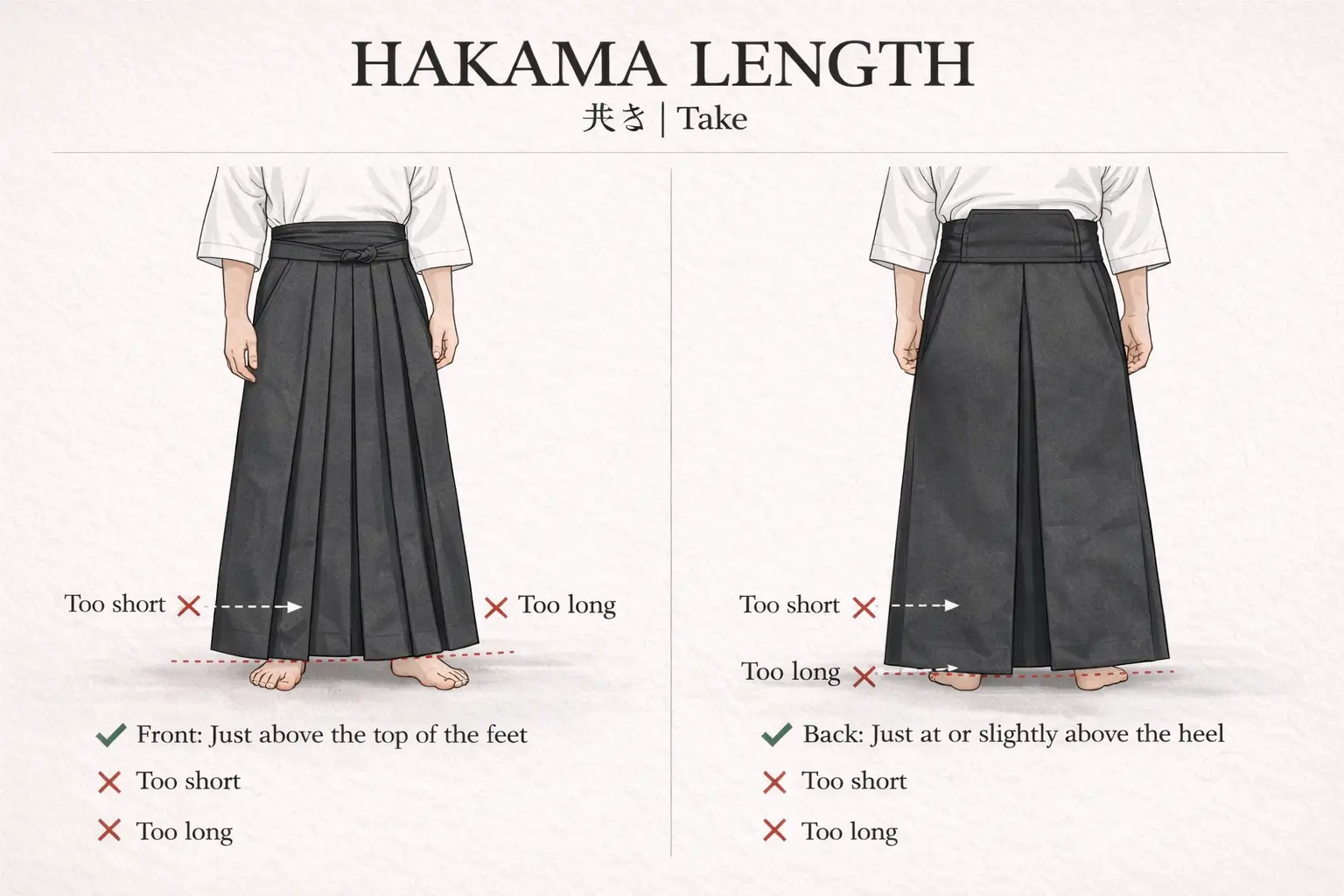
Hakama Sizing
The hakama length is measured from the hip bone (where the obi sits) down to the ankle bone.
The correct length should be:
At the front: the hakama should reach the top of the foot.
At the back: the hakama should reach just above the heel.
As a general guide for height:
If your height is 150–155 cm, hakama size 22 is usually correct.
If your height is 155–160 cm, hakama size 23.
If your height is 160–165 cm, hakama size 24.
If your height is 165–170 cm, hakama size 25.
If your height is 170–175 cm, hakama size 26.
If your height is 175–180 cm, hakama size 27.
If your height is 180–185 cm, hakama size 28.
If your height is 185–190 cm, hakama size 29.
These are guidelines; different manufacturers may vary slightly.
Gi Sizing (Keikogi / Uwagi)
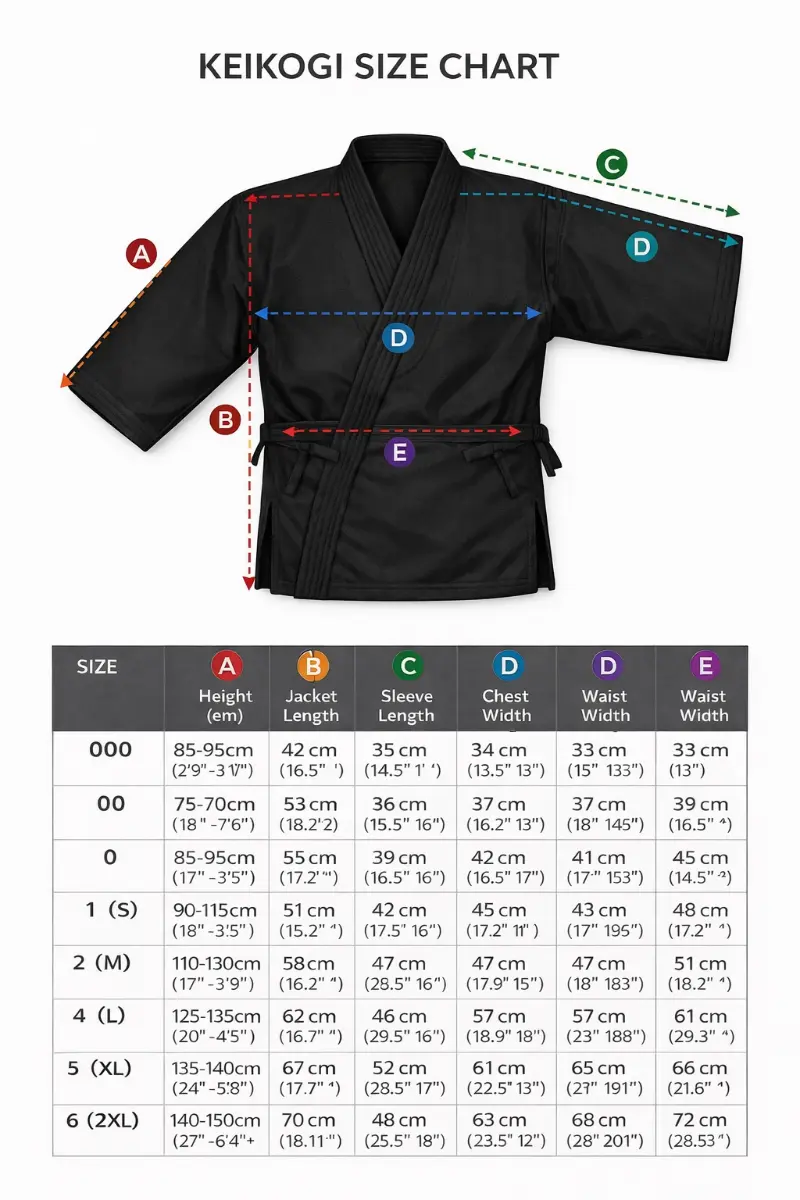
The sleeve should reach from the wrist to about the middle of the hand.
The jacket should reach approximately mid-thigh.
The trousers should reach the ankle.
When the jacket is wrapped, the left panel should reach the side seam of the body.
The gi should be loose enough to allow movement, but not so loose that it becomes baggy.
道着 – The Gi (Uwagi)
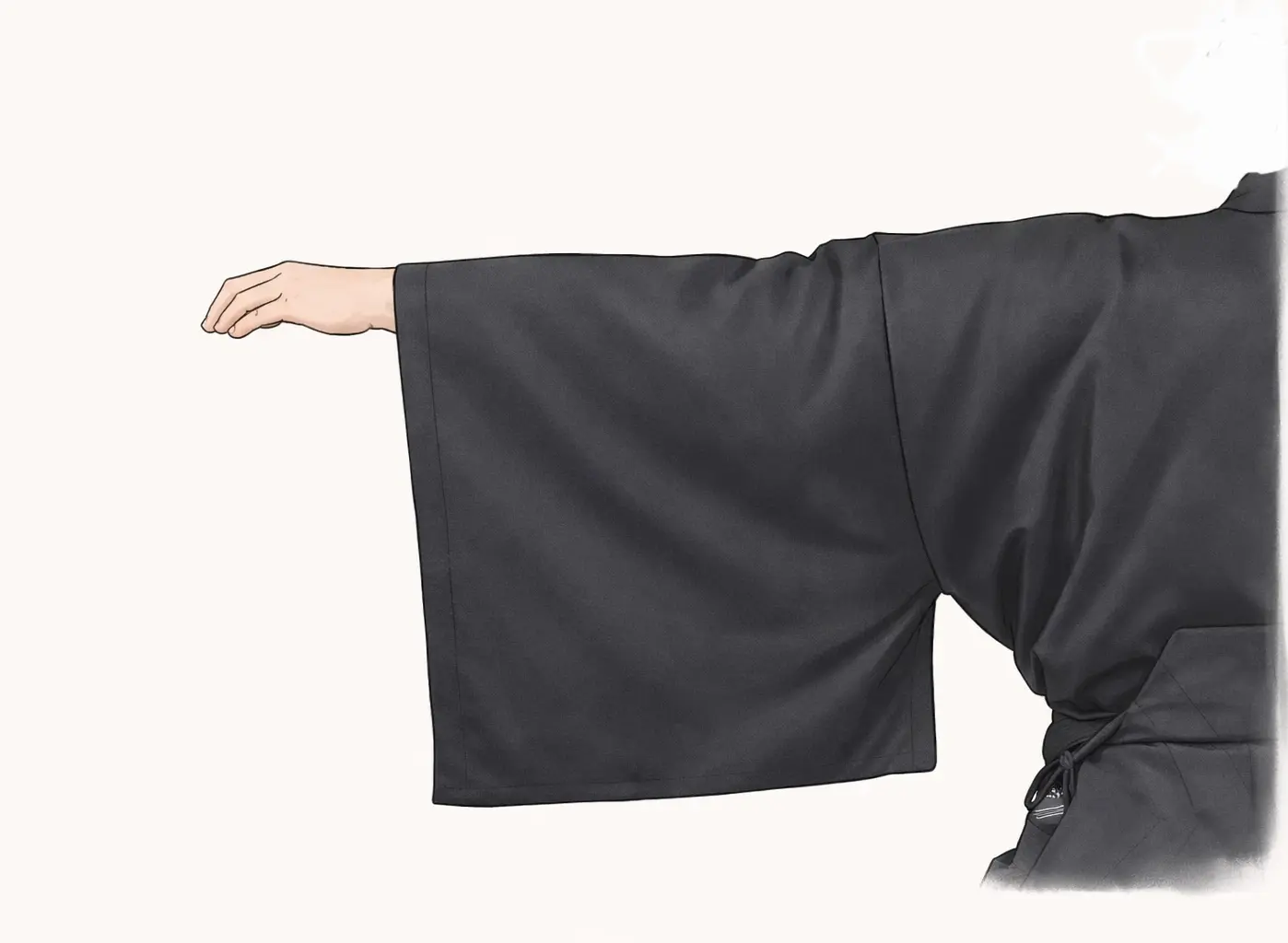
Structure of the Long-Sleeved Gi
The sleeve is called sode.
The main body of the jacket is called migoro.
The collar is called eri.
The tie strings are called himo.
Types of Gi
There are two main sleeve types.
One has large sleeves in the traditional kimono style.
The other has shorter sleeves for modern training.
Large sleeves may be tied back using a tasuki.
襷 – Tasuki (Sleeve Tie)
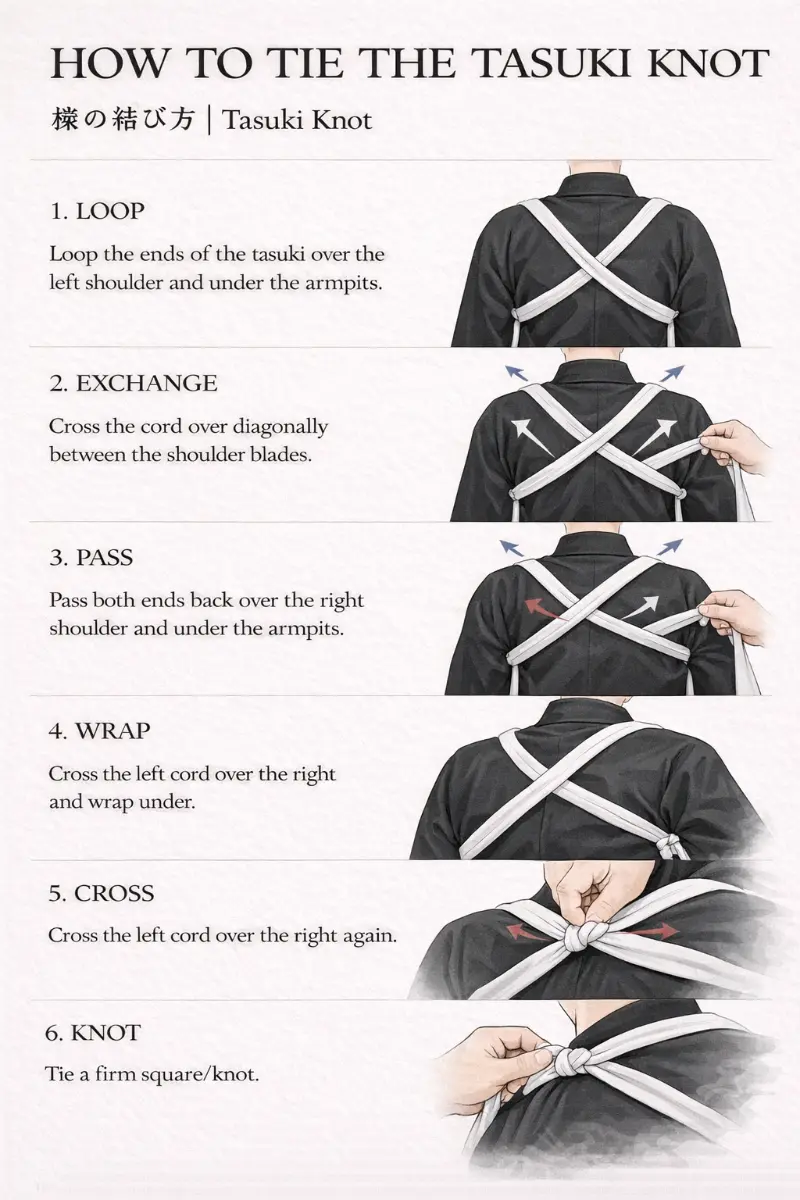
Tasuki are used to tie back the sleeves so they do not interfere with movement.
How to tie tasuki:
Place the tasuki over the shoulders.
Cross the straps behind the back.
Bring the straps forward under the arms.
Tie them at the back.
The sleeves will now be pulled back and secured.
Tasuki are commonly used for sword practice, archery, demonstrations, and traditional work.
襷掛け – Tasuki-gake
襷は背で交差し、脇で結ぶ。
Tasuki crosses on the back and is tied at the side.
剣術用襷掛け – Kenjutsu Yō Tasuki-gake
Tasuki tying method for swordsmanship.
In swordsmanship, the knot is tied under the left arm so it does not interfere with the sword or obi.
In other traditions, the knot position may be different.
For example, in archery or festival wear, the tasuki may be tied at the back or front depending on the activity.
The purpose of tasuki is always the same: to secure the sleeves and allow free movement.
袴 – The Hakama
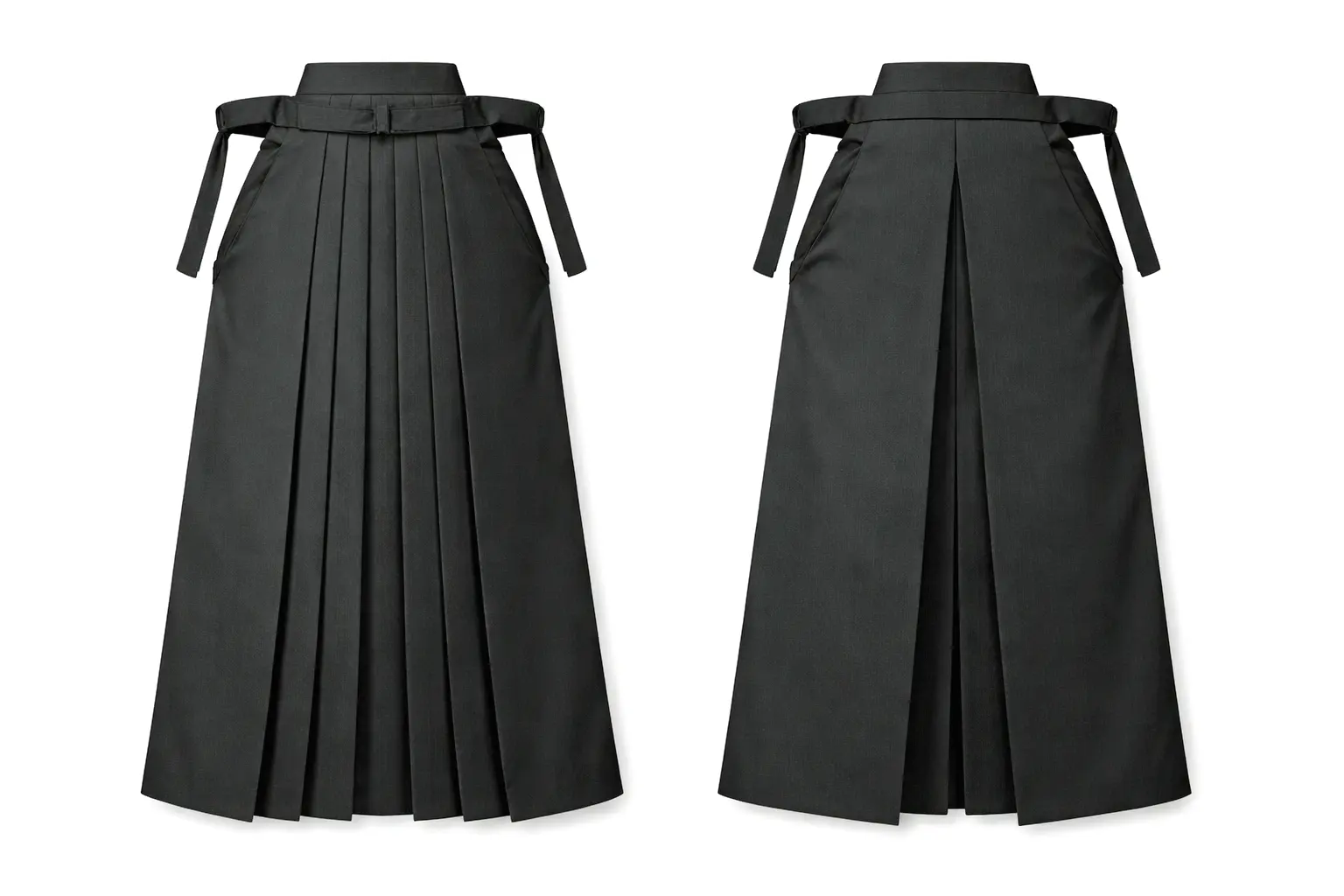
Types of Hakama
There are two main types of hakama.
The divided hakama is called umanori hakama and is used for riding and martial arts.
The undivided hakama is called andon hakama and is more formal.
Hakama can also be made from different materials.
Silk hakama are formal.
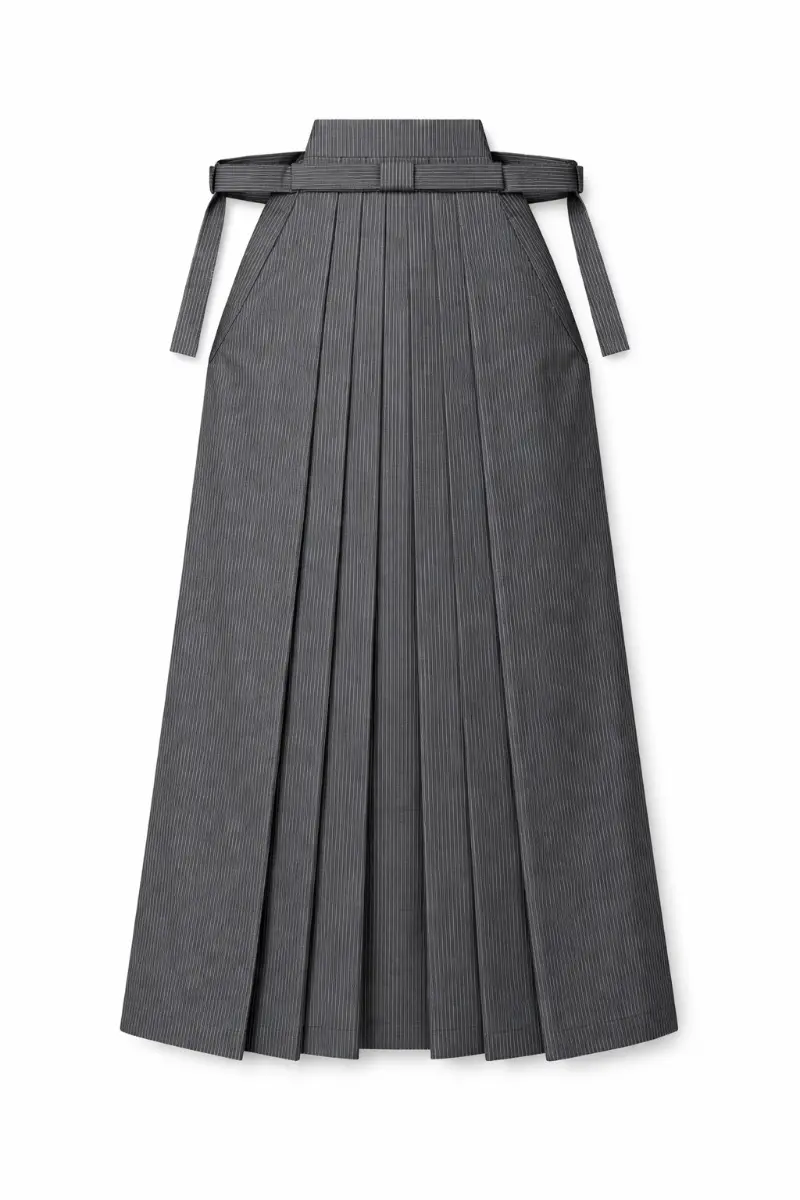
Cotton hakama are used for training.
Parts of the Hakama
The front board is called mae-ita.
The back board is called koshiita.
The straps are called himo.
The pleats are called hida.
The koshiita helps support posture and keeps the back straight.
袴の着け方 – How to Wear the Hakama
First, put on the hakama.
Tie the front himo using a square knot.
Place the koshiita against the obi at the back.
Bring the back himo forward to the front.
Tie the hakama knot.
There is no single universal method; different schools and traditions have different ways of tying the hakama.
袴のひだ – Hakama Pleats and Virtues
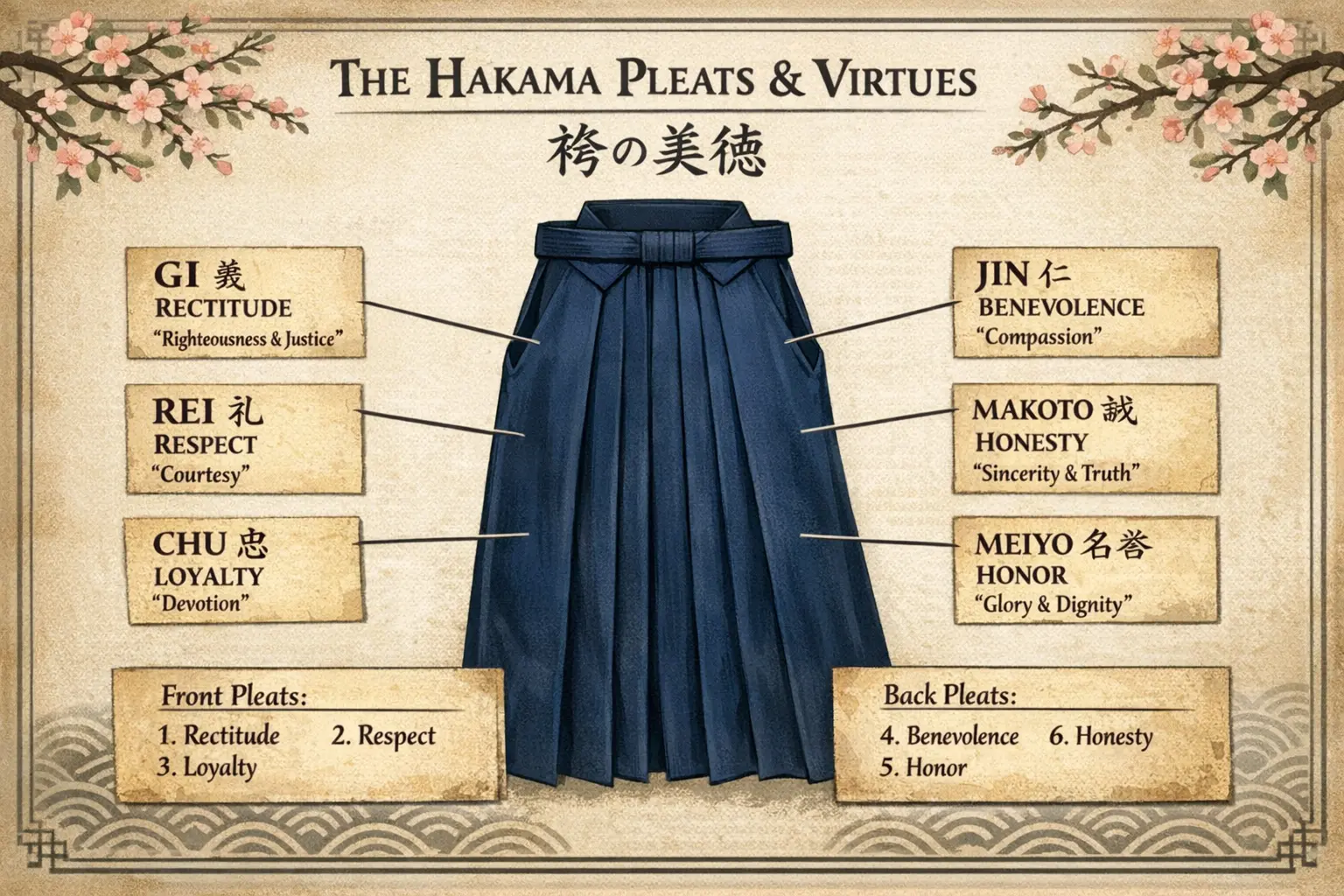
The seven pleats of the hakama represent virtues:
Jin – Benevolence
Gi – Righteousness
Rei – Respect
Chi – Wisdom
Shin – Honesty
Chu – Loyalty
Meiyo – Honour
The pleats must be straight because the character must be straight.
袴の折り方 – Folding the Hakama
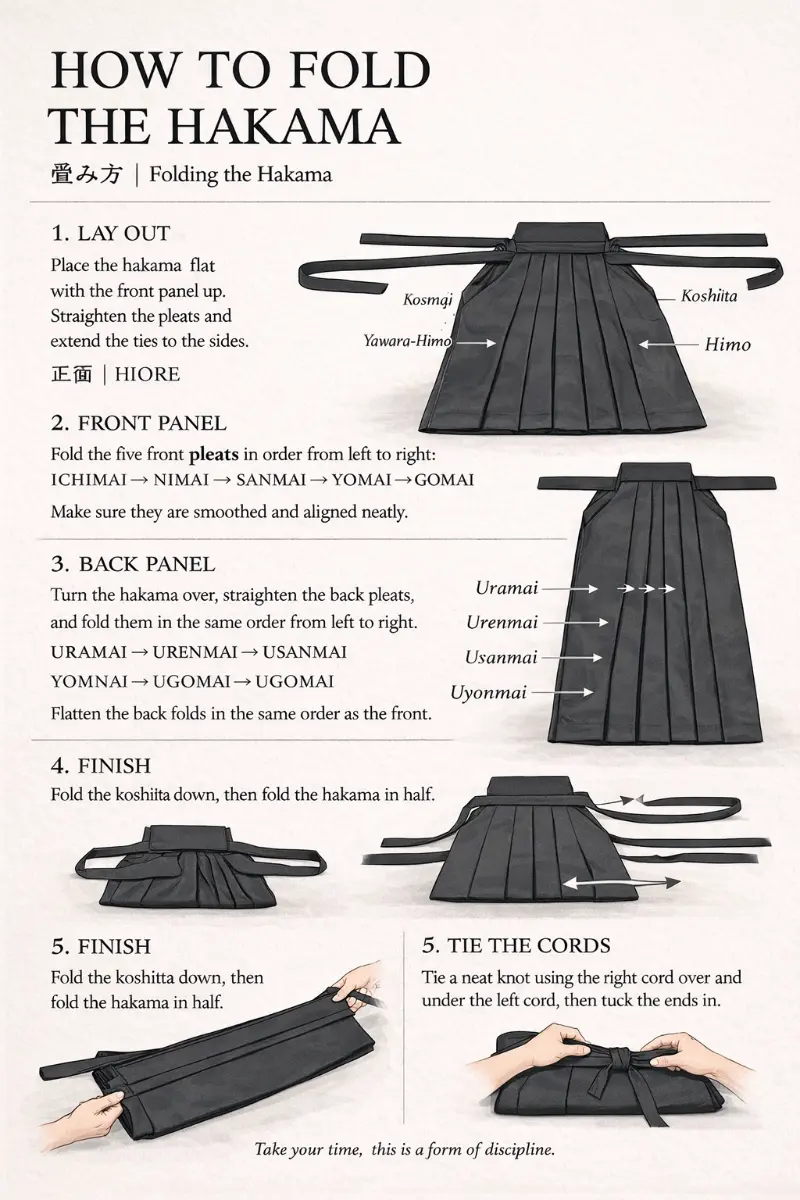
Lay the hakama flat with the pleats straight.
Fold the sides inward.
Fold the bottom upward.
Fold the koshiita down.
Wrap the himo neatly around the folded hakama.
Folding the hakama is part of training and part of discipline.
道着の畳み方 – Folding the Gi
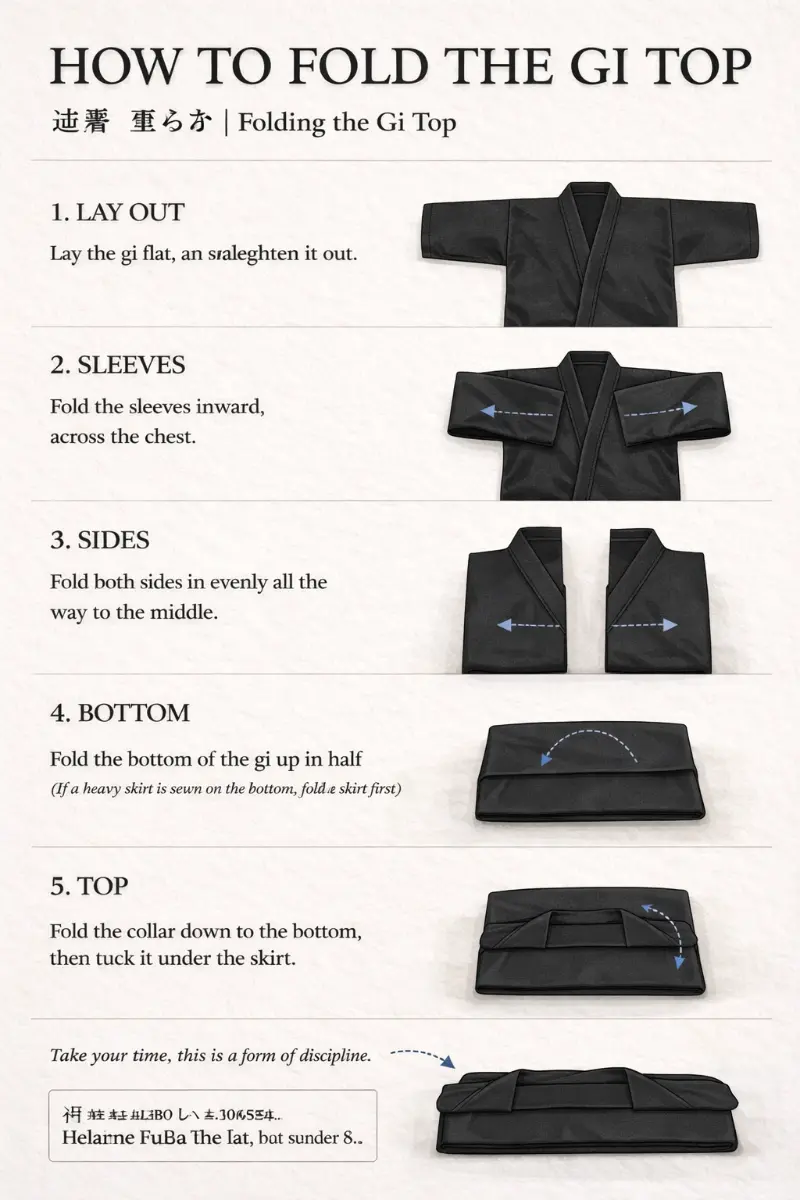
Lay the gi flat.
Fold the sleeves inward.
Fold the sides inward.
Fold the trousers.
Place the trousers on top of the jacket.
Fold everything together into a neat bundle.
帯 – Obi
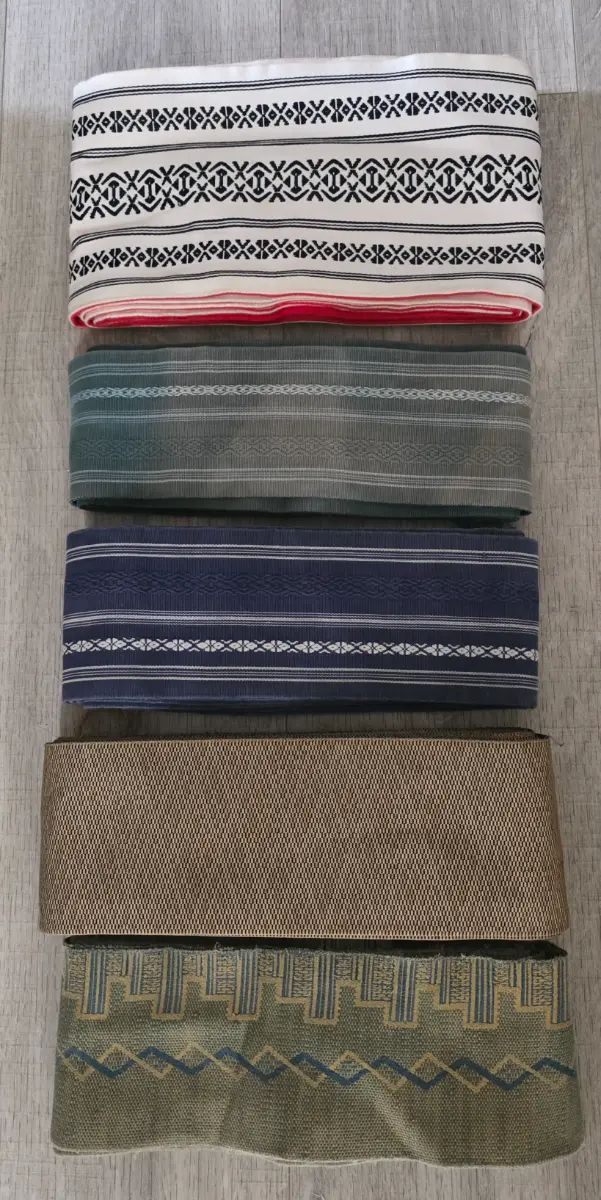
The obi supports the lower back, supports the sword, holds the hakama in place, and helps maintain posture.
If the obi is loose, posture becomes loose.
下着 – Shitagi
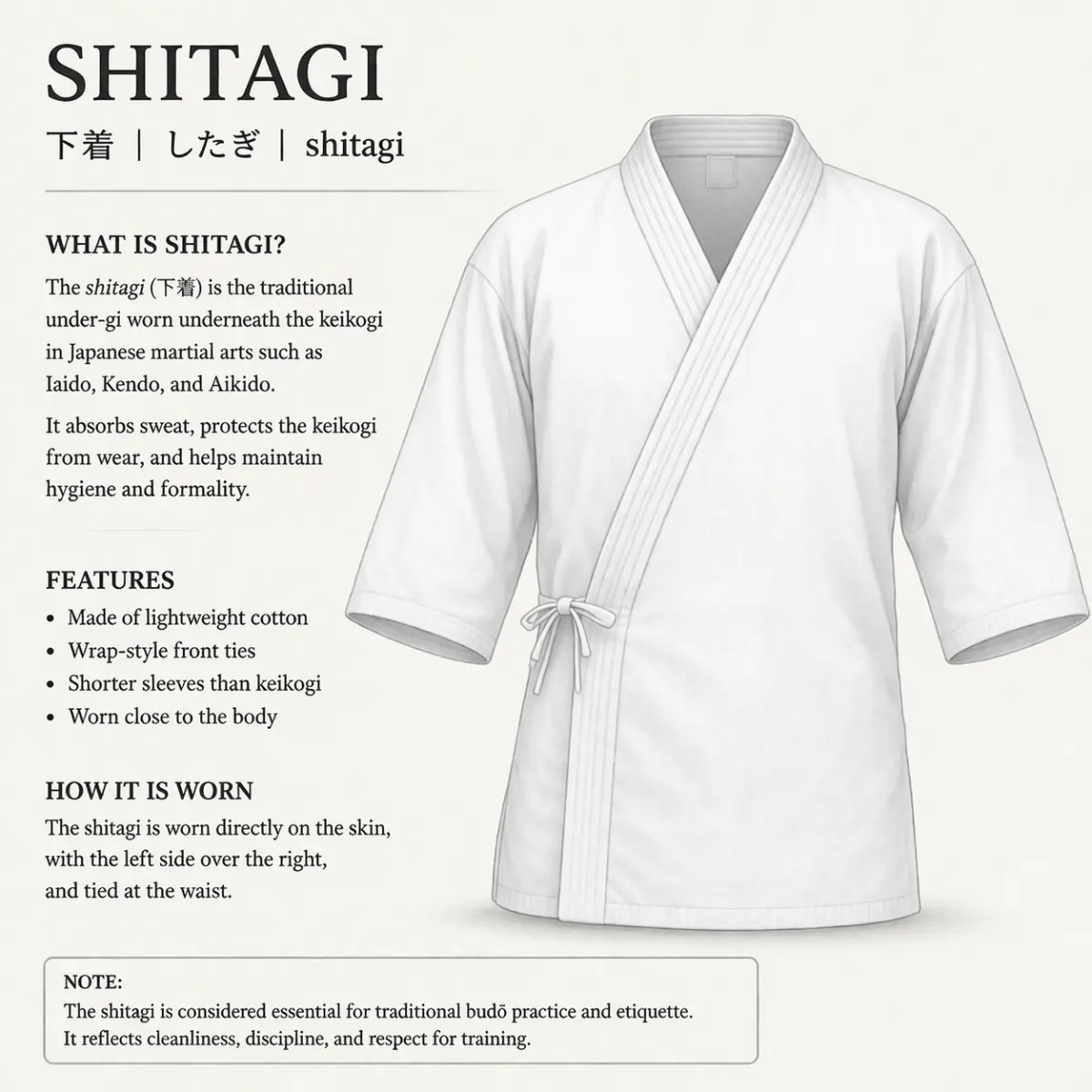
The shitagi is worn under the gi to absorb sweat and keep the outer garments clean.
足袋 – Tabi
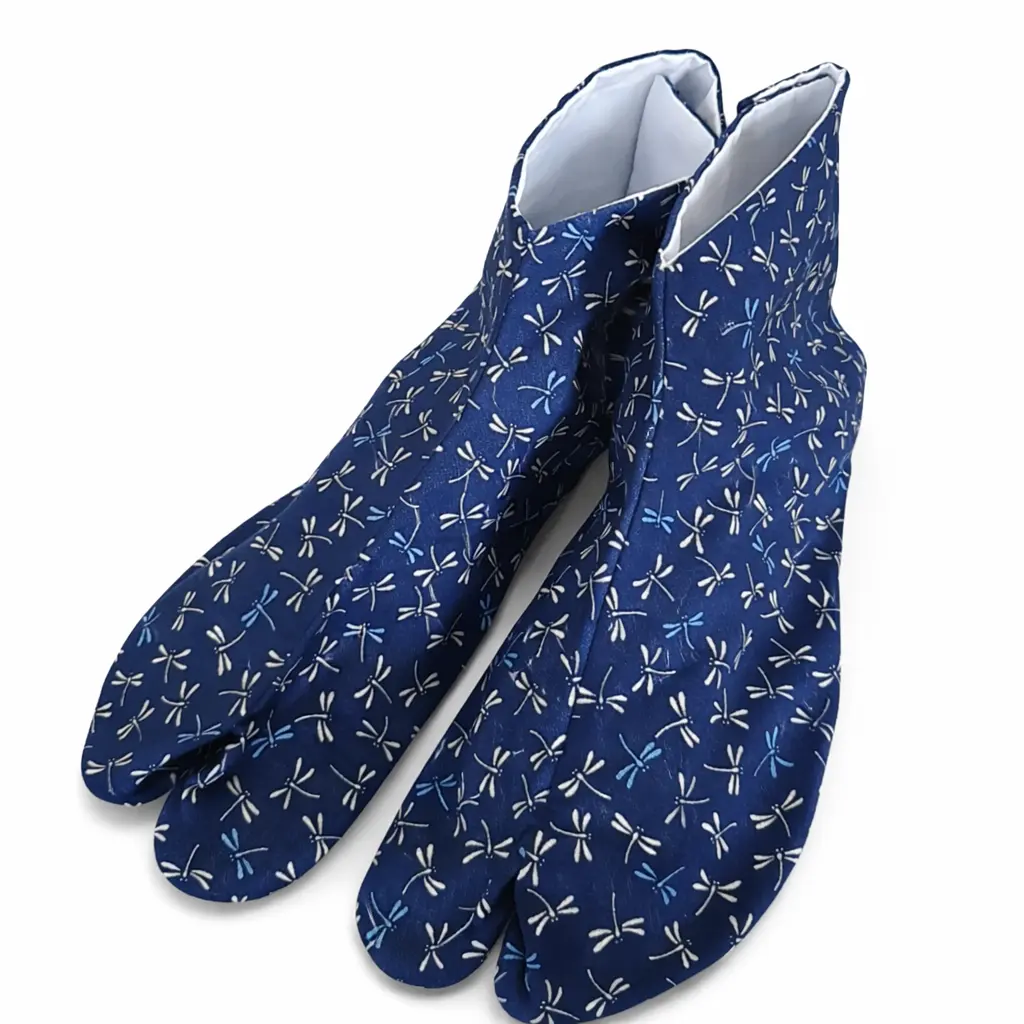
Tabi are used for sliding footwork and indoor training. They allow smooth movement and protect the feet.
正装と稽古着 – Formal vs Training Wear
Training wear is usually made of cotton. It is durable and used for everyday practice. Often training gi have shorter sleeves.
Formal wear is often made of silk. It is more elegant and is used for gradings, ceremonies, and demonstrations. Formal gi usually have long sleeves.
見た目と段位 – Appearance and Rank
At beginner level, the student learns how to wear the uniform correctly.
At intermediate level, the student maintains neatness and correct appearance.
At advanced level, the uniform should always be correct without needing adjustment.
At senior level, the practitioner represents the school and must set the standard.
Before skill is seen, appearance is seen.
服装と動き – Clothing and Movement
The obi teaches posture.
The hakama teaches footwork.
The koshiita teaches a straight back.
The sleeves teach arm control.
The tabi teach sliding movement.
結び – Closing Philosophy
Clothing shapes posture.
Posture shapes movement.
Movement shapes technique.
The sword is the soul.
The clothing is the form.
The posture is the spirit.
© 2026 Stuart Knight / Tenshin Dojo. All rights reserved.
No part of this website may be reproduced, copied, or distributed without written permission.