
The Sword and the Self. - Responsibility, Decision, and Commitment
The Sword and the Self
Responsibility, Decision, and Commitment
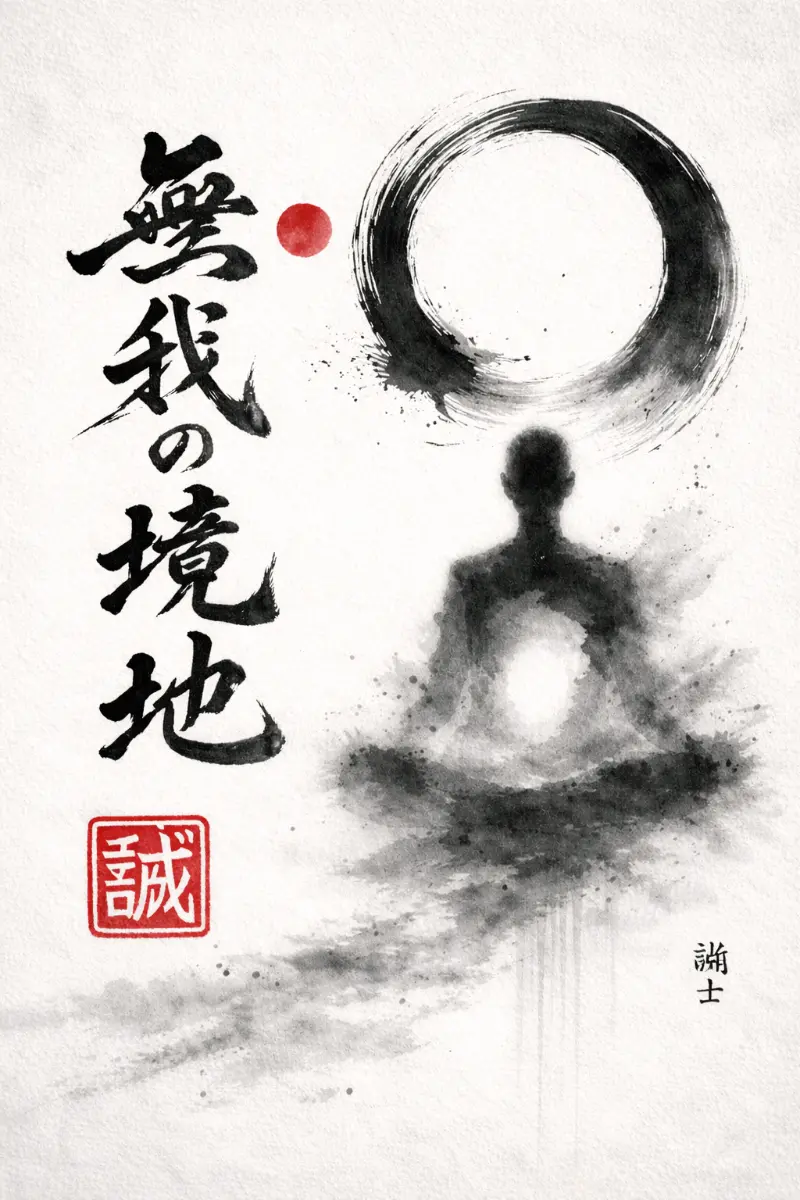
'Responsibility asks whether to act.
Clarity allows correct decision.
Decision determines the moment.
Commitment ensures the action is completed.
Restraint prevents excess.
Awareness observes the result.
Training reveals the habit.
Correct the habit, and the technique improves.'
Epigraph
序言
The sword is not drawn with the hand alone.
It is drawn with the mind, and decided by the person.
Before action, there must be responsibility.
Before commitment, there must be decision.
After decision, there must be no hesitation.
The sword reveals the person who holds it.
Preface
序
These writings are not about how people lived in the past, and they are not a code of behaviour. People who study the sword today will never use it in combat, and that is as it should be. The value of training in the modern world is not in learning how to fight with a sword, but in what the training teaches about the self.
Sword training places a person in situations where posture must be correct, timing must be correct, distance must be correct, and action must be committed. Under these conditions, hesitation, rushing, fear, frustration, and lack of commitment become very clear. Because the results are immediate and visible, training becomes a way to study behaviour, decision-making, and responsibility under pressure.
For this reason, these writings are not about fighting. They are about responsibility, decision, and commitment, and what training can teach about these things.
The sword is simply the tool through which these lessons are studied.
Historical Context
歴史的背景
The sword has not always been a training tool. For many centuries it was a practical weapon, used in times when decisions had immediate and serious consequences. The methods that survive today come from those times, but the purpose of training has changed.
Historically, there is a distinction between bujutsu, the martial techniques developed for survival in conflict, and budō, the martial way, in which training became a method of personal development, discipline, and education. Modern practice belongs to this second category. The purpose is no longer survival in battle, but the development of the person through training.
The idea that all historical warriors followed a single moral code is a simplified view of history. Different periods were different, and the realities of war were often harsh. However, during long periods of peace, many martial traditions began to place greater emphasis on discipline, composure, and character. These ideas were preserved and passed down through training, and they form much of what is now considered the philosophical side of martial arts.
These writings do not attempt to recreate the life or ethics of the past. They attempt to describe what training teaches in the present.
Responsibility
責任
Training teaches responsibility because actions have consequences.
If posture is poor, the cut fails.
If distance is wrong, the cut fails.
If timing is wrong, the cut fails.
If commitment is weak, the cut fails.
These are simple examples, but they teach a larger lesson: actions produce results, whether intended or not. Responsibility is the habit of considering those results before acting.
Responsibility is therefore not a rule, but an understanding. It is the understanding that actions affect outcomes, and that careless action leads to careless results.
Decision
決断
Decision determines when action should take place.
Many mistakes in training come from acting too early, acting too late, or not acting at all. Decision requires seeing clearly and choosing the correct moment. This is not guessing and not reacting blindly, but observing and then deciding.
Indecision leads to hesitation. Poor decision leads to mistimed action. Clear decision allows correct timing.
Training therefore becomes a way to study decision-making under pressure.
Commitment
覚悟
Commitment is what allows a decision to become a completed action.
In cutting practice, a common mistake is that the cut stops at the moment of contact. This is often not a problem of strength, but a problem of commitment. The decision to cut was made, but the action was not fully carried through.
Commitment means that once a correct decision has been made, the action is carried through completely.
Training teaches not only how to begin an action, but how to complete it.
The Chain of Action
行の連鎖
Over time, it becomes clear that action is the final part of a longer chain:
Responsibility — Should action be taken?
Clarity — What is happening?
Decision — When should action be taken?
Commitment — The action must be carried through.
Action — The technique itself.
Completion — The action must finish correctly.
Awareness — Awareness remains after the action.
If any part of this chain is missing, the result is usually incorrect.
Additional Observations from Training
修行から学ぶこと
Over time, training begins to teach lessons that are not written down, but become clear through experience. Among these are restraint, awareness, composure, honesty, perseverance, and respect. These are not separate from technical training; they develop through training.
Restraint — 抑制
Many mistakes come not from doing too little, but from doing too much. Too much strength, too much speed, and too much tension often cause techniques to fail.
Restraint is not hesitation. It is control. It is the ability to do only what is necessary.
Awareness — 意識
Many mistakes are caused not by lack of ability, but by lack of attention. Training gradually develops awareness of posture, distance, timing, and eventually awareness of one’s own habits and reactions.
Composure — 平静
Under pressure, people rush, freeze, or panic. Composure is the ability to remain functional under pressure and continue to think and act correctly.
Honesty — 正直
The sword encourages honesty because results cannot be hidden. Either the cut worked, or it did not. Honest training means seeing mistakes clearly and correcting them.
Perseverance — 継続
Progress is slow. Improvement comes from continued practice over time, not from occasional effort.
Respect — 礼
Respect is shown in how one trains, how one treats others, and how one maintains equipment. It is part of daily behaviour, not just formal etiquette.
Closing Reflection
Over time, training tends to develop certain qualities in a person. Not because they are demanded, but because without them, progress is difficult.
Training teaches responsibility, because actions have consequences.
Training teaches decision, because timing matters.
Training teaches commitment, because incomplete action fails.
Training teaches restraint, because too much force causes failure.
Training teaches awareness, because inattention leads to mistakes.
Training teaches composure, because panic interferes with action.
Training teaches honesty, because results cannot be hidden.
Training teaches perseverance, because progress is slow.
Training teaches respect, because training depends on others.
These are not rules. They are lessons that appear through training over time.
Sayings
口伝
Responsibility before action.
Decision before commitment.
Commitment before completion.
Do not act without reason.
Do not decide without clarity.
Do not begin what you will not finish.
Hesitation and recklessness are both mistakes.
Correct the cause, not just the result.
Training reveals the self.
Afterword
終
These writings have not attempted to give a code of behaviour. They are observations from training and from experience over time.
The sword is only the tool. The lessons apply to the person.
For this reason, the study of the sword becomes, in the end, a study of the self.