
Past masters
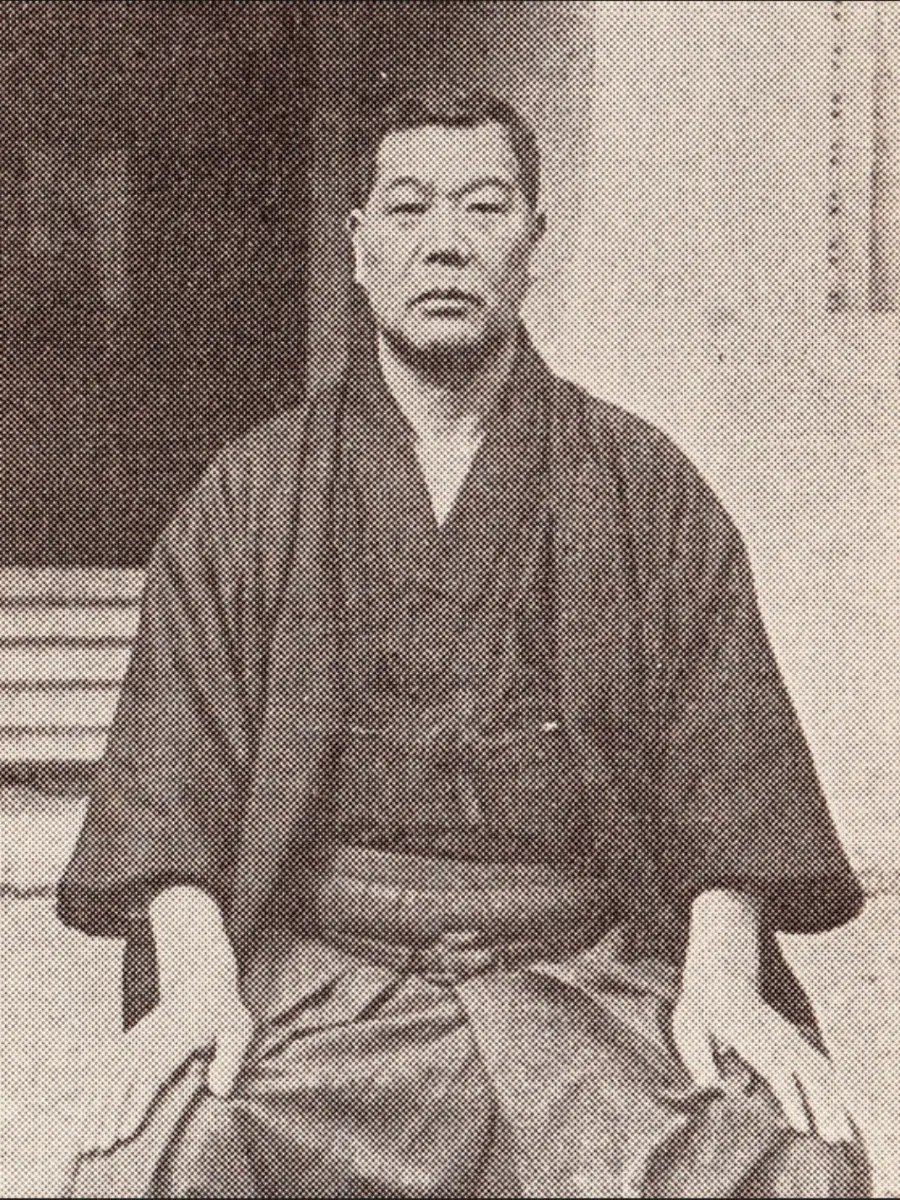
Ogawa Kinnosuke 10th Dan Master
Ogawa Kinnosuke stood as a living pillar of the old warrior tradition — a legendary 10th Dan whose presence carried both quiet authority and the weight of centuries. In an era when the classical arts were passing from battlefield necessity into disciplined practice, his mastery bridged the ancient and the modern.
He was one of only four martial masters to receive the revered Shijōhōshō, an Imperial commendation bestowed by the Emperor of Japan for extraordinary achievement and service to the martial way. Among those honored alongside him were Seiji Mochida, a towering figure in Kendo, and Kyuzo Mifune, whose genius shaped the art of Judo. In later years, the great Morihei Ueshiba, founder of Aikido, would also be awarded this same distinction — placing Ogawa Sensei among the highest company in modern martial history.
In 1933, within the halls of the Butokukai in Kyoto — where tradition and discipline were preserved with solemn care — Ogawa Sensei began instructing a young Dan-grade martial artist named Kenshiro Abbe. What passed between them was more than technique; it was transmission. Steel, spirit, and principle were handed from one generation to the next.
Through such moments, the old ways endured — not as relics of a vanished age, but as living arts carried forward by those strong enough to bear them.
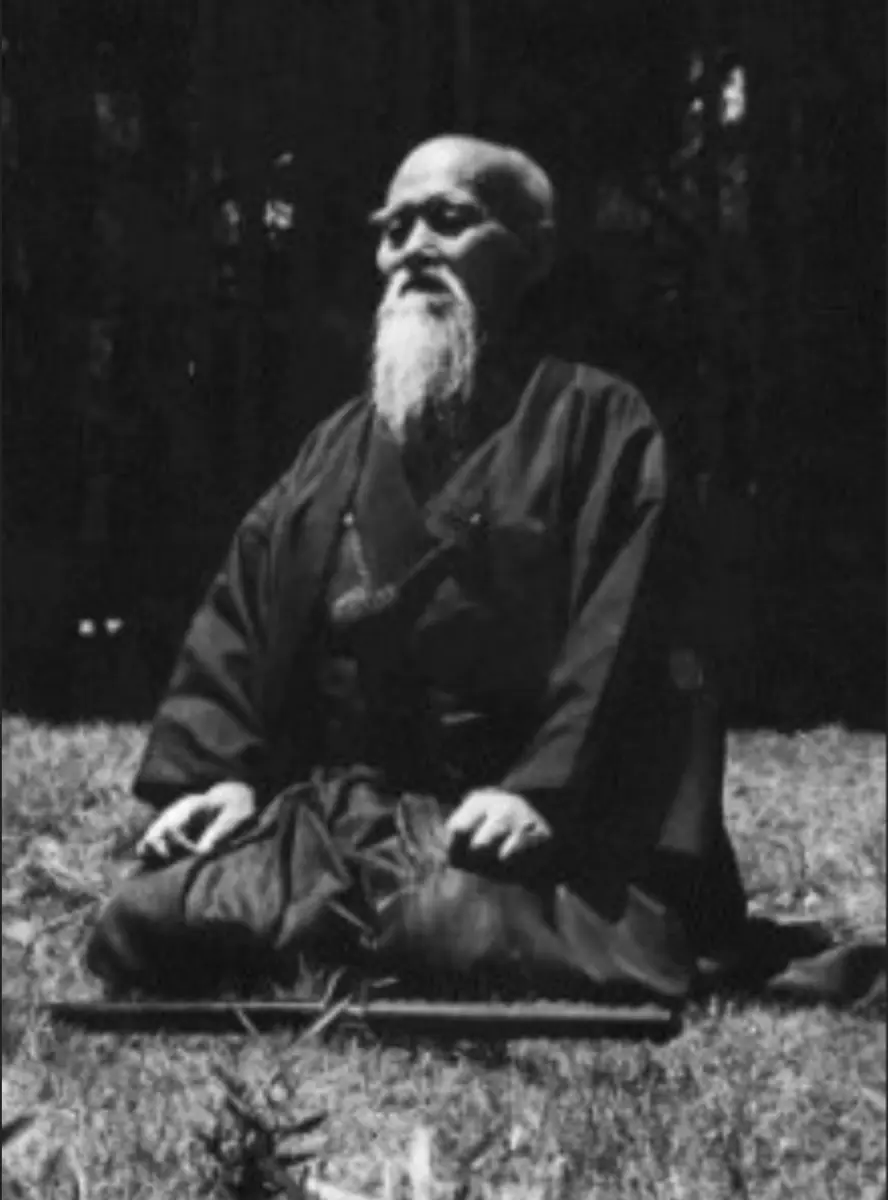
Morihei Ueshiba (Ō-Sensei) – Founder of Aikido
Morihei Ueshiba, known as Ō-Sensei, was the founder of Aikido and is regarded as one of the most influential martial artists of the 20th century. His teachings emphasised harmony, discipline, and the unification of mind, body, and spirit, moving beyond purely combative principles toward a more philosophical and ethical approach to martial training.
Among those influenced by his teachings was Kenshiro Abbe, a highly respected martial artist who played a key role in the development and spread of Japanese martial arts in Europe. Through this connection, elements of traditional budo philosophy, discipline, and technical understanding were passed on and preserved across generations.
The legacy of Ō-Sensei continues to shape modern martial arts practice, not only through technique, but through the deeper principles of sincerity, respect, and continuous self-development.
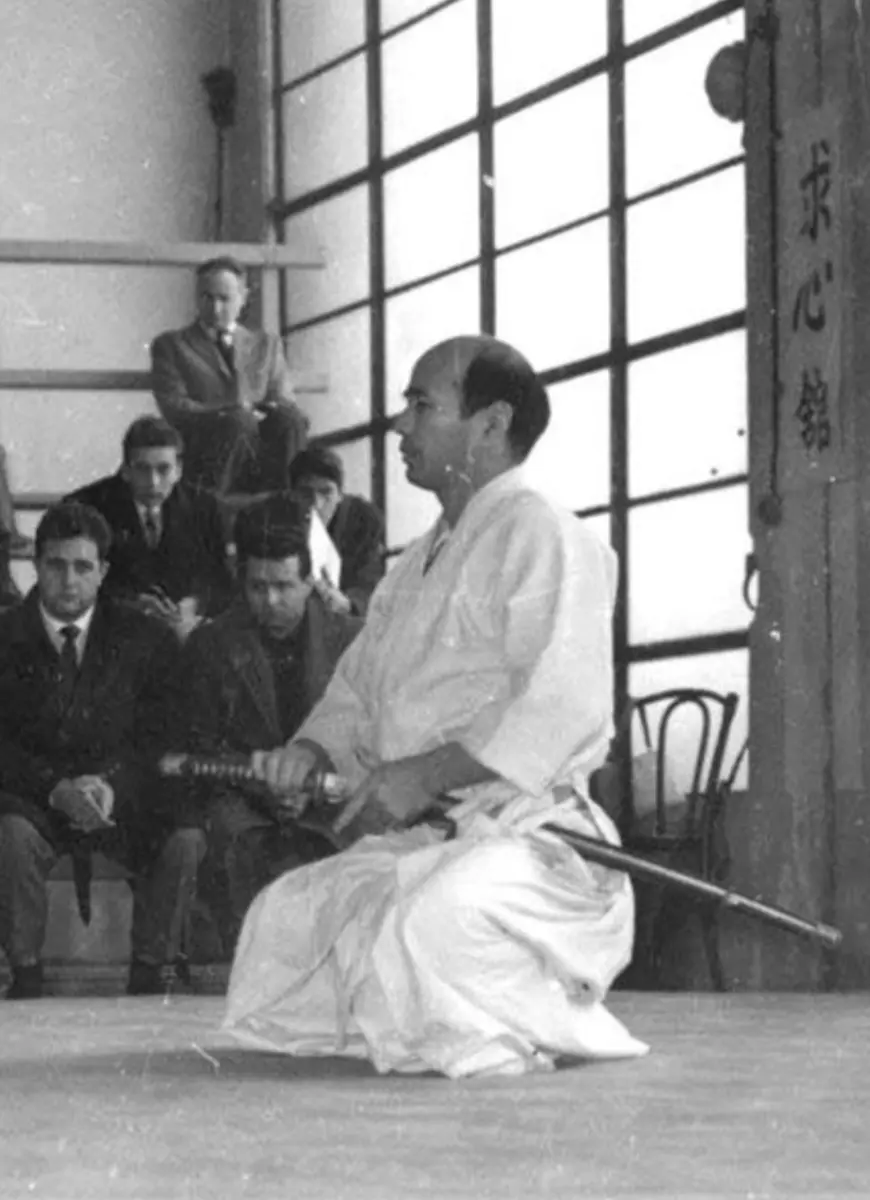
Kenshiro Abbe Sensei 8th Dan Founder of Kyu Shin Budo
By seventeen, he had already attained the rank of 4th Dan in Judo, and just one year later he became the youngest person in Japan to be awarded 5th Dan — an extraordinary distinction at such an age.
While training at the Dai Nippon Butoku Kai in Kyoto, he began researching an obscure ancient Japanese philosophical concept known as Kyushindo. The term may be interpreted as follows:
KYU — to desire, or to possess a deep yearning to seek something
SHIN — heart, mind, or spirit; the true and fundamental nature beyond superficial appearance
DO — a way or path
Taken together, Kyushindo may be understood as “the way of seeking knowledge of the fundamental nature of all things.” It was not merely a theoretical construct confined to martial arts, but a philosophy applicable to life in its entirety.
At the age of eighteen, after experiencing satori — a moment of profound enlightenment — Abbe Sensei began developing a new approach to Judo grounded in these principles. Two years later he became Grand Champion. By twenty-three he had been awarded 6th Dan in Judo and 3rd Dan in Kendo.
Around this time he was selected to study under Morihei Ueshiba, the founder of Aikido. He remained with Ueshiba for the next decade, refining both his martial skill and his understanding of Kyushindo’s underlying principles.
By the age of forty, Abbe Sensei had become a master of multiple disciplines, including Judo, Kendo, Iaido, and Jukendo, along with several other traditional arts. In 1950 he travelled to the United Kingdom, becoming one of the first Japanese masters to introduce these martial traditions there.
In Britain he met Tomio Otani, the eldest son of Masutaro Otani, a distinguished 7th Dan Judo master. Otani Sensei was already an experienced martial artist, having trained since childhood. Under Abbe Sensei’s guidance, he would go on to become a master budoka in his own right and a key figure in the transmission of Kyushin Budō.
Masutaro Otani Sensei
Masutaro Otani belonged to that generation of martial men who stood with one foot in the old world and one in the new. Formed in the discipline of early modern Budo, yet shaped by the fading shadow of the samurai ethos, he carried himself with the quiet gravity of a man who understood that technique without character is empty.
A senior figure within the Japanese martial community, Otani Sensei was deeply influenced by the principles that flowed from the Kodokan tradition of Judo — refinement through repetition, victory through balance, and moral development through disciplined practice. Yet his understanding of Budo was never confined to throws and holds. For him, Judo was a vehicle for shaping the human spirit.
Within his home, the dojo was not separate from daily life. His first-born son, Tomio Otani, was raised in this atmosphere of order, humility, and constant training. From an early age Tomio observed his father’s composure — how he moved, how he spoke little of rank, and how he regarded mastery not as display, but as responsibility. What the father embodied, the son absorbed.
Otani Sensei’s path would later intertwine with that of Kenshiro Abbe, one of the most dynamic martial innovators of his era. Though their temperaments differed — Abbe Sensei expansive and visionary, Otani Sensei steady and rooted — there was mutual respect. Where Abbe sought to articulate philosophy through motion, Otani ensured that principle never drifted from structure. Their exchanges were not merely technical; they were conversations about the future of Budo itself.
When Abbe Sensei travelled to Britain in the 1950s, it was within the extended circle of Otani’s household that seeds were planted for what would become a new chapter of martial history in the West. The relationship between Abbe and young Tomio unfolded under Masutaro’s watchful eye. As a father and a senior martial figure, he understood that true transmission requires both challenge and guidance. He allowed his son to train deeply under Abbe Sensei, knowing that the Way is strengthened through shared lineage, not guarded through isolation.
Masutaro Otani represented continuity. He stood for the disciplined framework of Judo at a time when many sought rapid advancement or recognition. He valued substance over title, conduct over acclaim. Those who trained under or around him recall not grand speeches, but presence — a standard set quietly and upheld without compromise.
Through his influence, the martial current flowed from Japan to Britain not as imitation, but as living tradition. In Tomio’s later teaching and in Abbe’s philosophical developments, one can trace the steady foundation laid by Masutaro Otani: the insistence that Budo is not merely practiced — it is lived.
Thus his legacy is not found only in certificates or rank, but in character carried forward. In the stillness before movement, in the dignity of restraint, in the bond between father, teacher, and student — there his spirit remains.
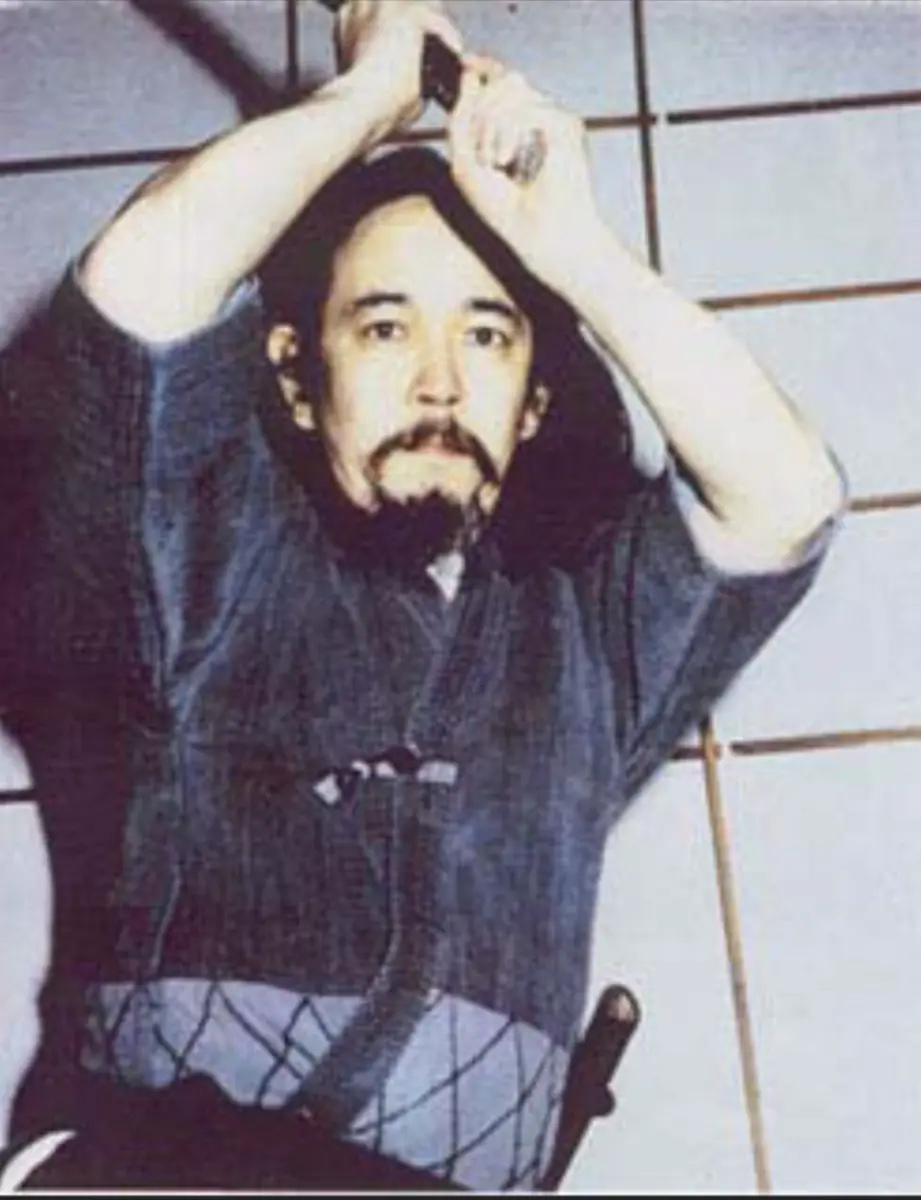
Otani Tomio Sensei Master Budoka
Born in 1939, Tomio Otani was the first son of the respected Butoku master Masutaro Otani. From childhood he moved among dojos rather than playgrounds, exposed early to the discipline of Budo and to many of the great masters of the twentieth century. The language of the sword, the silence of meditation, and the etiquette of the tatami formed the ground of his upbringing.
In 1955, Kenshiro Abbe arrived in Britain and stayed at the Otani family home. Tomio, then sixteen, began intensive study under him — Judo, Aikido, Iaido, and Kendo. These were not separate arts to him, but different expressions of one Way. He studied the code of the samurai in depth, absorbing Buddhist scripture and the writings of past warriors, seeking not romance, but understanding.
By 1960 he was appointed National Coach to the British Kendo Council, and a year later was graded 2nd Dan in Budo. Though he rarely spoke of rank, it is said he had reached 5th Dan by the time Abbe Sensei returned to Japan. Titles meant little to him; embodiment meant everything.
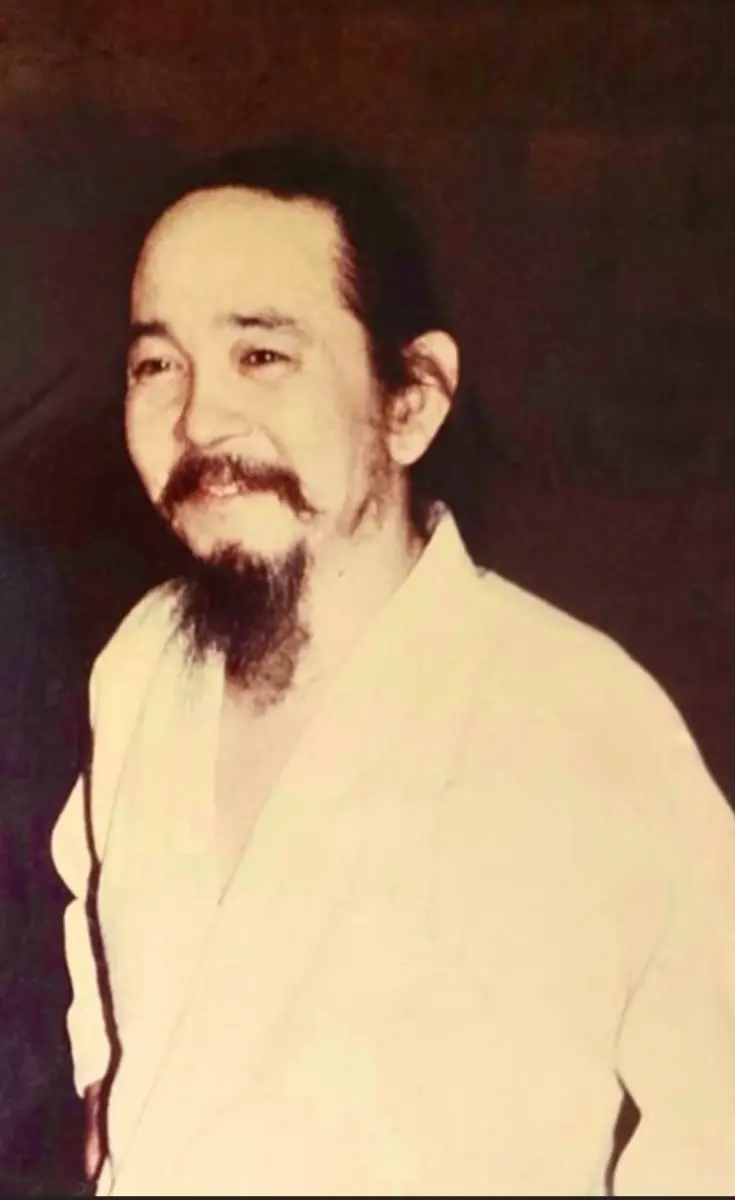
Beyond the dojo, Otani Sensei served in the Territorial Army with the Parachute Regiment. Stories were often told — half legend, half truth — of him descending from aircraft with a katana strapped across his back. Whether symbolic or literal, the image endured: the modern warrior carrying an ancient blade.
From the early 1970s onward, he devoted himself to developing Abbe Sensei’s vision of Kyushindo, refining its place not only within martial training but within daily life. Training was intimate and exacting — rarely more than two or three students at a time — at the house in Whyteleafe, Surrey, which he shared with Jane, a yoga teacher. There, discipline was personal, transmission direct.
In 1980, invited by Tudor Box to demonstrate at a Judo school in Carshalton, Otani Sensei presented Iaido of remarkable purity — effortless movement, precise timing, controlled power. Among those present were Tudor Box and Mike Selvey; both began training with him the following week.
His classes were never limited to physical technique. Alongside throws and cuts were discussions of Eastern philosophy, religion, and the human condition. He taught strategy, calligraphy of movement, and lesser-known disciplines such as Ho Jo Jutsu — the art of binding an opponent on the battlefield. An accomplished artist and thinker, he saw no separation between brushstroke, blade, and mind.
In the early 1980s the Yamabushi Yodokan was established. The name carried meaning:
Yo — the essential principle, like the pivot pin that holds a folding fan together.
Do — the Way.
Kan — the hall.
It was to be a hall of essential practice, where the Way was both preserved and lived.
In 1981 the Yodokan found a permanent dojo above shops in Brockley, South London. Extended training sessions and dedicated space forged a serious and disciplined school. Sensei Box taught during the day, Mike Selvey in the evenings, while Otani Sensei oversaw instruction and guided the advanced students with quiet authority.
In the early 1990s his health began to fail. Longstanding gastric illness returned, and stomach cancer was diagnosed. On the 6th of June 1991, Otani Sensei passed away.
He left behind no grand proclamations, no pursuit of fame — only students. Hundreds of them, carrying varied skills, sharpened minds, and a deeper understanding of the Way.
In their movement, in their stillness, his teaching endures — old in spirit, yet alive in the modern world.
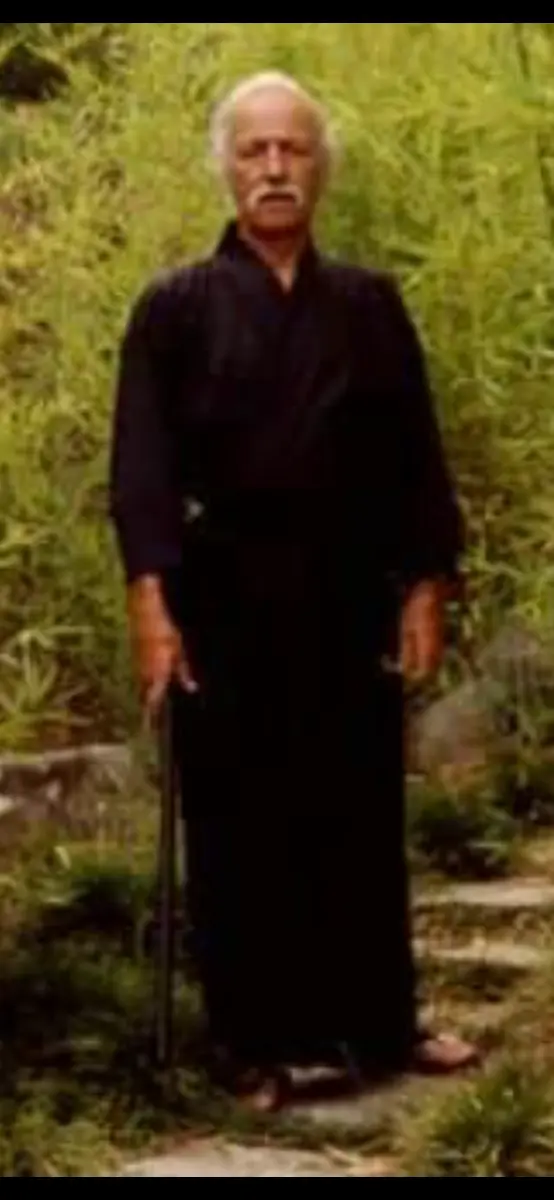
Sensei Tudor Box Hanshi
Francis Tudor Box was born in 1929 in Ystradgynlais, South Wales — a hard land that shapes resilient men. When he was nine or ten, his family moved to London, a city that would soon be tested by fire. During the Second World War, his father served as an air raid warden. Tudor — as he preferred to be called — would later recount stories of roaming the bomb-scarred streets after the sirens had fallen silent. With characteristic humour, he would tell people that his father made him stand outside the shelter to shout when the bombers had gone — one of many dry jokes delivered with a straight face.
War and discipline marked his early years. In 1949 he joined the regular British Army, progressing to the Parachute Regiment. It is known he served in Korea and Burma — theatres where resolve is tested beyond comfort. The soldier’s path refined in him a calm decisiveness that would later define his teaching.
Leaving the forces in 1963, he entered civilian life as an HGV driver, guiding tanker lorries across Britain and Europe. Among colleagues he was known simply as “Mick,” a name never fully explained. Yet whether on the road or in uniform, he carried himself with the same steady presence.
Though he had trained in martial disciplines during his military years, it was not until 1968 that he formally entered civilian dojos. There he studied Judo, Jujutsu, and Karate under respected masters, including Masutaro Otani and Kenshiro Abbe. He trained at the famed “Hut,” where Otani’s Judo school stood and where the British Judo Council was founded — a place humble in structure, yet formidable in spirit.
In June 1976, Masutaro Otani graded Tudor to 1st Dan. By then he was teaching Judo in Sutton, building strong and disciplined schools. His students — among them his son Michael and daughter Sarah — achieved success nationally and internationally. Yet medals were never the true aim; character was.
In 1979 he began training under Tomio Otani, a Budo master he had long respected. Under Tomio’s guidance, Tudor deepened his study beyond throws and strikes, embracing Judo, Jujutsu, Aikido, Iaido, Kobudo, and the philosophy that bound them together. Only Kendo did he decline, remarking with honesty that he disliked the confined feeling of the armour — a rare admission from a man otherwise fearless.
In 1981, Tomio Otani graded him to 3rd Dan Renshi in Budo, the same period in which the Yamabushi Yodokan was established in Brockley, London. This full-time dojo became a forge of serious practice, and Tudor Sensei taught there most days, shaping students with a blend of military precision and traditional etiquette. In 1984, within those walls, he was graded 4th Dan Budo by Otani Sensei — recognition not only of skill, but of steadfast commitment.
When the Yodokan later dissolved, Sensei Box returned to teaching in Sutton and surrounding areas, continuing quietly, without pursuit of acclaim. In time, he was awarded 8th Dan Hanshi by Alfred Bates — an acknowledgement of decades devoted to the Way.
On 16th February 2005, Francis Tudor Box passed away.
He left behind no legend carved in stone, but something more enduring — students shaped by discipline, humour tempered by hardship, and a life that bridged battlefield, street, and dojo. In him, the old warrior spirit found modern expression: steady, practical, and unpretentious.
His Way was not loud.
It was walked.
© 2026 Stuart Knight / Tenshin Dojo. All rights reserved.
No part of this website may be reproduced, copied, or distributed without written permission.