Dojo Cho
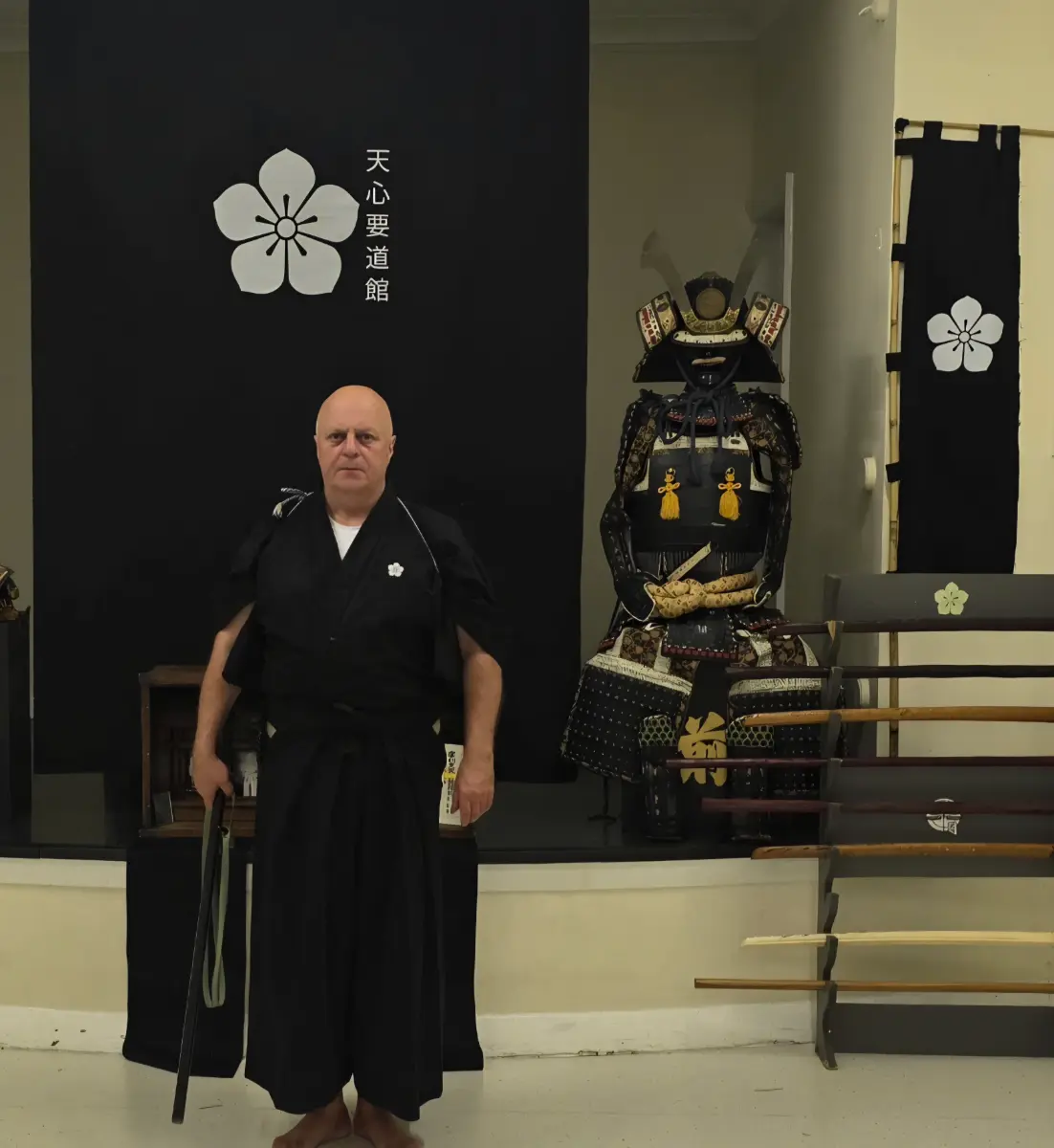
Sensei Stuart Knight 3rd Dan Shidōin
In my youth, the path began simply. Together with my twin sister, Sarah Knight, I trained in Ishinryu Karate — long hours of basics, sparring and Kata under the steady guidance of Sensei Quin. Those early years forged discipline and resilience, yet the deeper current of my journey had still to unfold.
In 2008, at a seminar in London, I first encountered Mike Selvey. Within moments of observing his movement — precise, calm, without wasted effort — I recognised something beyond technique. It was the quiet authority of lived Budo. From that day forward, I committed myself to becoming his student.
Thus began my immersion into the Tenshin Ryu arts — the living stream of transmission from Sensei Otani. I travelled regularly to Croydon to train under Shihan Selvey’s direct instruction, absorbing not only physical disciplines but the philosophical foundations that sustain them. The training was exacting. The standards uncompromising. Yet within that forge, understanding began to take root.
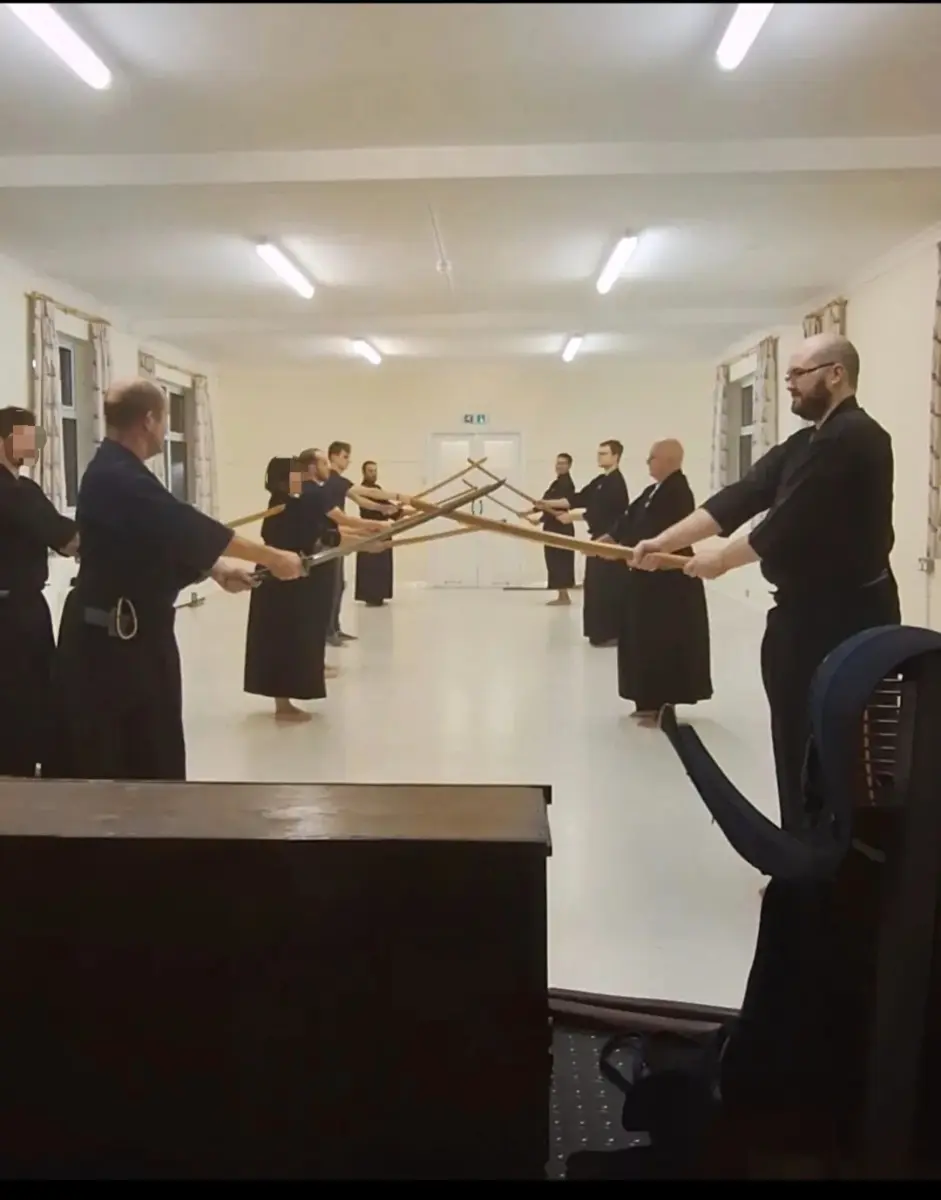
In time, I was invited to assist in teaching at the Tsunami Yodokan, becoming a regular assistant instructor in early 2011. The dojo moved across locations — Shirley, Sidcup, central Croydon, Addington, Wallington — but wherever training took place, the spirit of the Yodokan remained intact. Guiding students in the Tenshin Ryu system , learning through teaching, the true weight of responsibility.
I was graded Shodan in Budo in early 2011. From there my path widened — travelling across the UK and internationally alongside Shihan Selvey, teaching seminars, performing demonstrations, and representing our disciplines abroad.
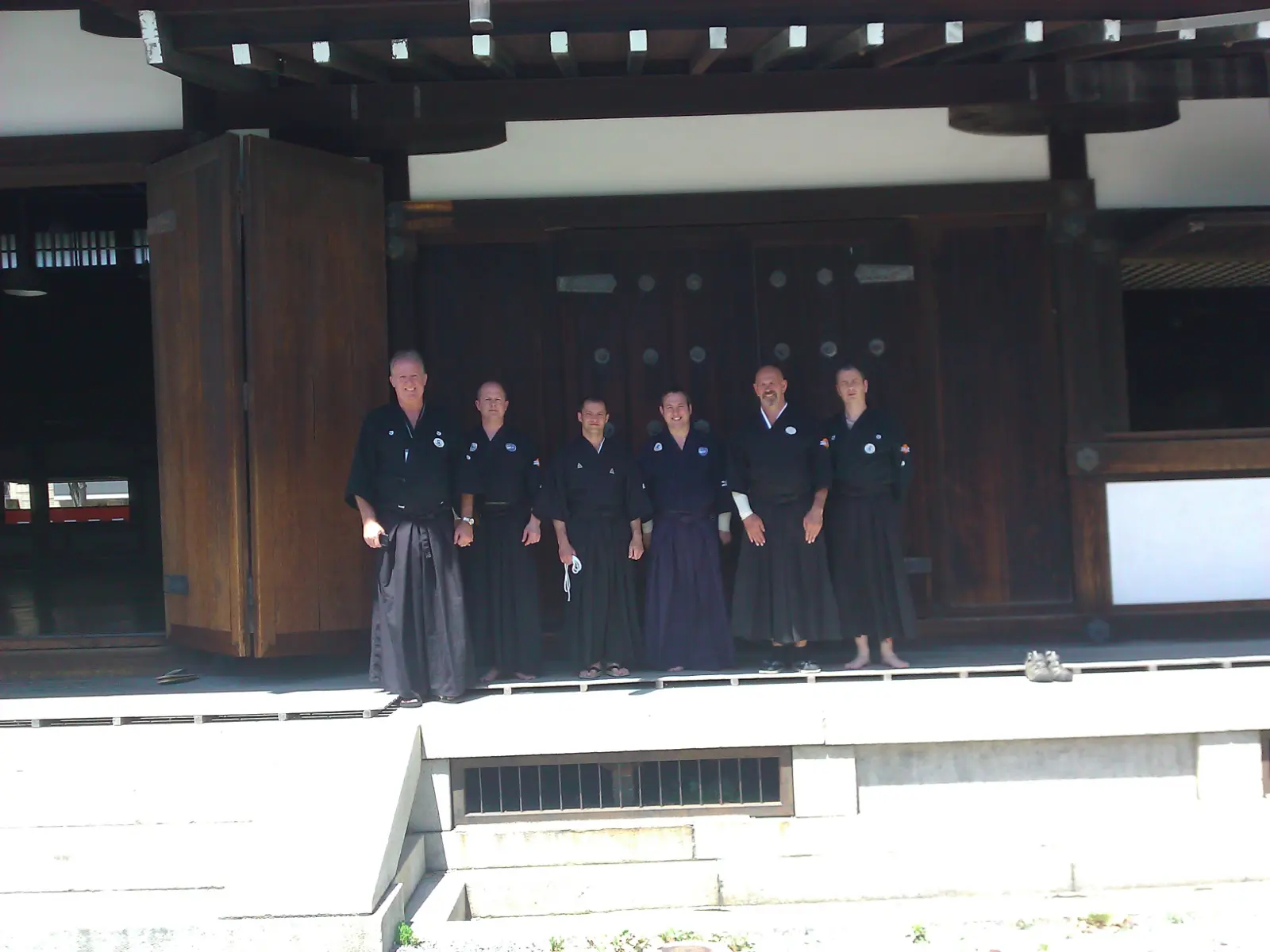
In 2012, I was honoured to compete in Kyoto, Japan, at the 4th World Butoku Sai, returning with both individual and team awards, representing Tsunami Dojo along side my teacher, fellow instructors and students . At that same event, my Shodan in Iaido was further endorsed by the authority of the Dai Nippon Butoku Kai — a significant moment of acknowledgement that bound my training directly to the old traditions of Kyoto.
In 2019, I received 3rd Dan Budo and the title of Doshi from Shihan Selvey, with ratification by the Dai Nippon Butoku Kai the following year.
Opening a New Dojo in Uncertain Times
In May 2021 with the blessing and encouragement from my teacher Selvey Shihan, I opened Tenshin Yodokan in Barling, Southend-on-Sea — a hall dedicated to the continuation of the samurai arts in both form and spirit.
The dojo opened just three days after the final lifting of lockdown restrictions in the United Kingdom following the COVID epidemic. During Covid, many clubs had closed permanently. Some instructors had stepped away entirely. Normal training for most sports and martial arts clubs had not yet fully resumed. Communities were cautious. While others were rebuilding or retreating, I felt convicted, here was an opportunity to create a new place to learn budo arts. Even though I was starting from nothing I wanted to play my part as a practioner who could provide a space to enhance physical and mental wellbeing and renewed hope which the country was deeply lacking following a national sense of loss in the aftermath of Covid.
At that time, I continued travelling weekly to Honbu in London to pursue my own training under my instructor. My development remained guided. I remained a student.
The dojo itself, however, was built and sustained independently.
These were exciting but challenging times, with no structural support from affiliated dojos. I remained convinced, this was an ideal moment to motivate people to physical and mental good health. I was happy to accept the burden of organisational, financial, physical, and mental responsibility. In the first few months, sessions were held with little student presence. The doors were opened regardless. The floor was swept and practice continued. This didn’t feel like achievement — it was more like resolve. There was doubt, but never retreat.
Tenshin Yodokan had grown steadily to ten committed students — built not through extravagant advertising, but through consistency, structure, and word of mouth. From open doors but empty floor to ten practitioners during a time of national uncertainty was a confirmation that perseverance gains its own momentum.
That same year, I was awarded the teaching title of Shidōin — an affirmation not of status, but of responsibility.
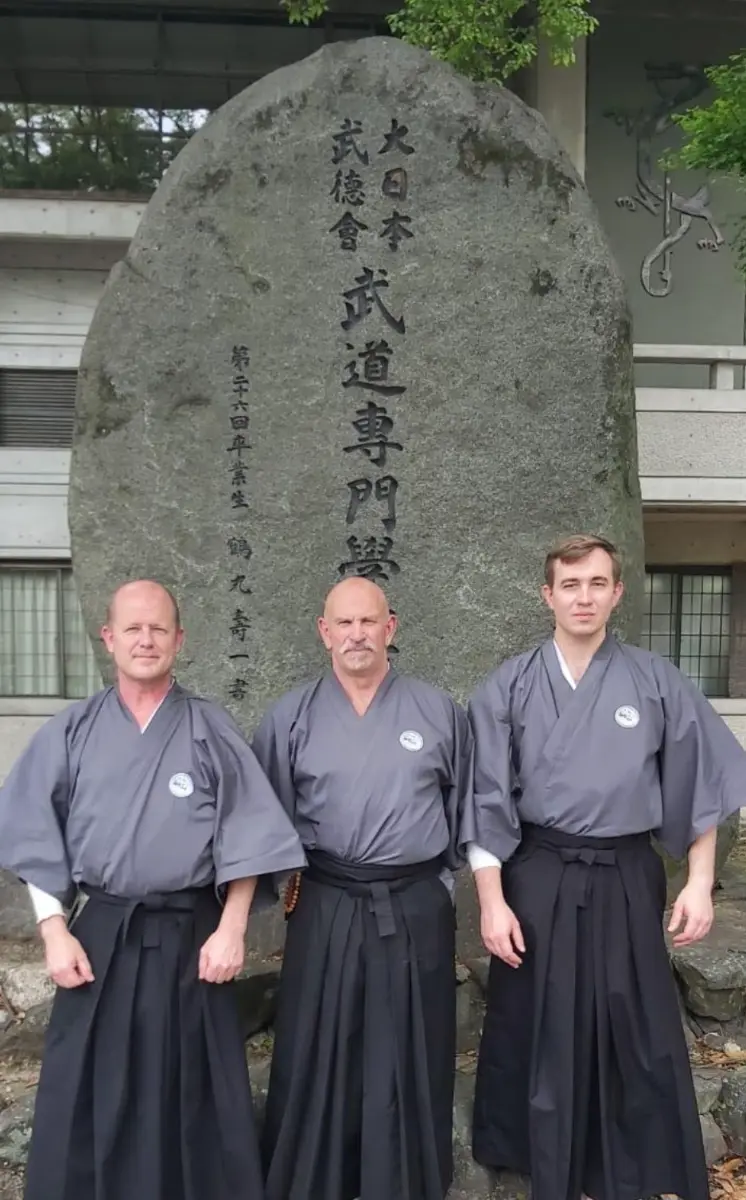
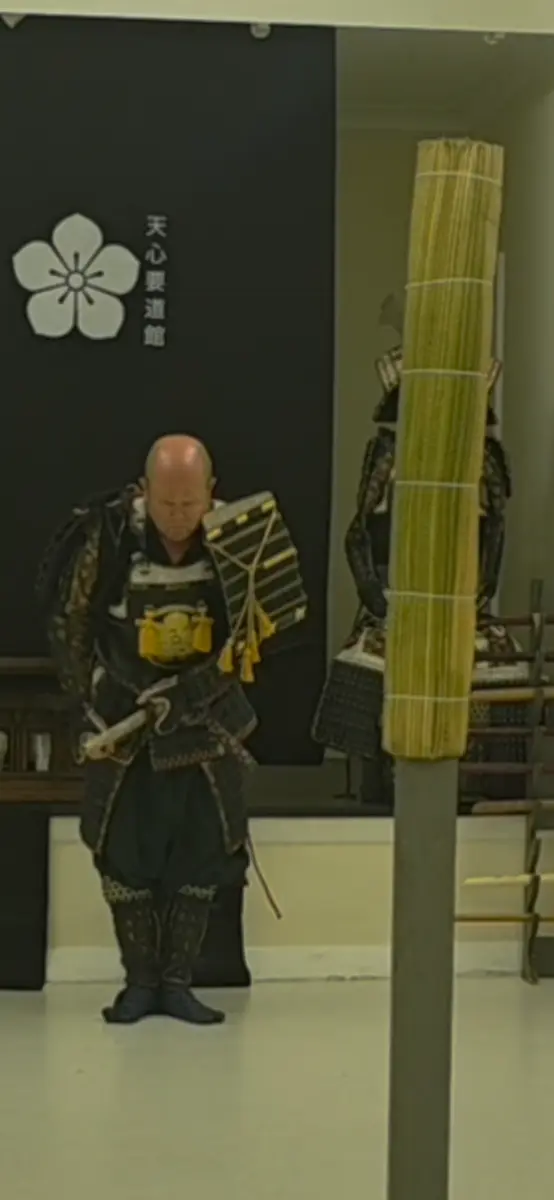
In April of 2023 i was honoured once again to compete in Kyoto at the 6th world Butoku Sai along side my teacher and fellow Deshi , representing Tsunami dojo under the leadership of Shihan Selvey. We returned with many individual and team awards.
Forging My Own Path
Toward the end of 2023, another shift occurred.
Distance — both geographical and personal — required me to stand more fully upon my own understanding. Regular correction became less available due not only to distance, but to the growing financial pressures and rising costs that made frequent travel increasingly impractical. What remained were principles — and the obligation to embody them without immediate oversight.
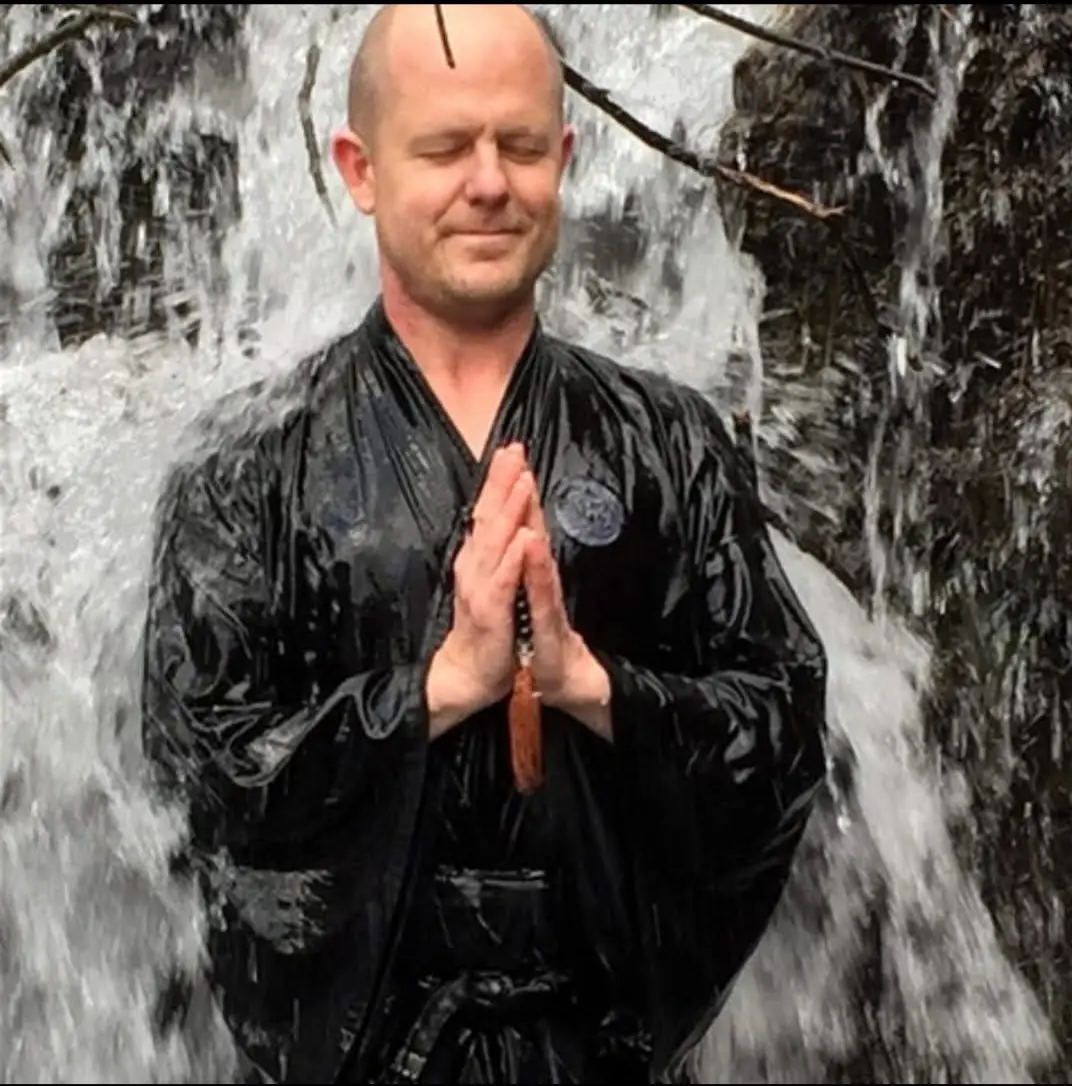
At this stage, I strengthened and formalised the dojo’s annual Misogi.
Misogi had long existed within our tradition, but in a period marked by restriction, inflation, and reduced access to direct instruction, its importance deepened. It became not a reaction, but a reaffirmation — a conscious decision to preserve continuity when circumstances made such continuity more difficult.
Held at the beginning of each year, Misogi serves as a rite of cleansing and renewal — a deliberate casting off of accumulated burden before stepping forward into the unknown. It is physically demanding, often pushing participants into the sharp clarity of fight-or-flight response. The experience resists easy explanation. It must be endured to be understood.
For the dojo, it is discipline and shared hardship.
For me, it is reflection and alignment.
Each year begins not casually, but consciously.
2024 — Embodiment and Expansion
In 2024, technique moved from imitation into embodiment.
Without constant correction, I relied upon internalised principle. Kata felt inhabited rather than rehearsed. Movement became less mechanical, more present.
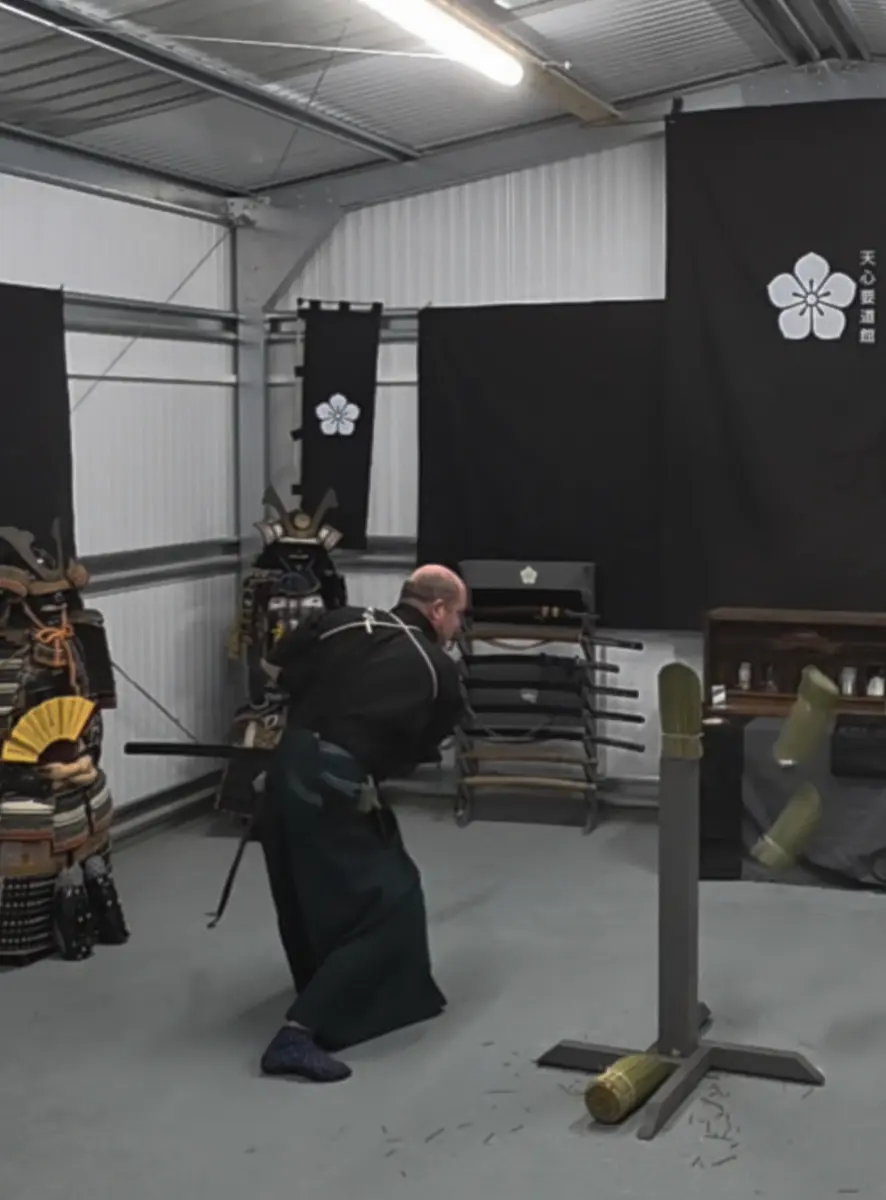
Late that year, I began personally organising specialised tameshigiri seminars for advanced students.
Traditional tatami omote mats were difficult to source. Rather than postpone training, I sought an alternative.
Local reed beds along the seawall offered possibility.
With the help of trusted friends, I sourced and prepared natural reeds by hand so that training could continue without interruption. They were harvested, dried, rolled, and bound into suitable cutting targets.
The intention was simple: to ensure that opportunity remained available to those who had committed to their practice.
In many traditional settings, a student might cut one target — sometimes sharing half a roll — in a session.
Through sourcing and preparing material ourselves, each participant cut approximately ten full targets.
Ten opportunities to refine hasuji.
Ten opportunities to adjust distance.
Ten opportunities to correct structure and breath.
Repetition created understanding.
Within the dojo, continuity deepened. Though small in number, there was stability. Several students progressed to 1st Kyu — pre-Shodan level — through steady and disciplined training. In a martial environment where turnover is common, ours remained modest — but committed.
That year’s Misogi reflected maturation.
2025 — Deeper understanding
In 2025, two further tameshigiri seminars were arranged, continuing the work begun the previous year. Again, reeds were harvested and prepared by hand when commercial tatami remained unavailable. Each seminar required hours of unseen preparation before a single blade was drawn.
The scale remained deliberate. Students continued to cut multiple targets — often up to ten per seminar — allowing technical understanding to compound through repetition.
Simultaneously, a more permanent solution was taking shape.
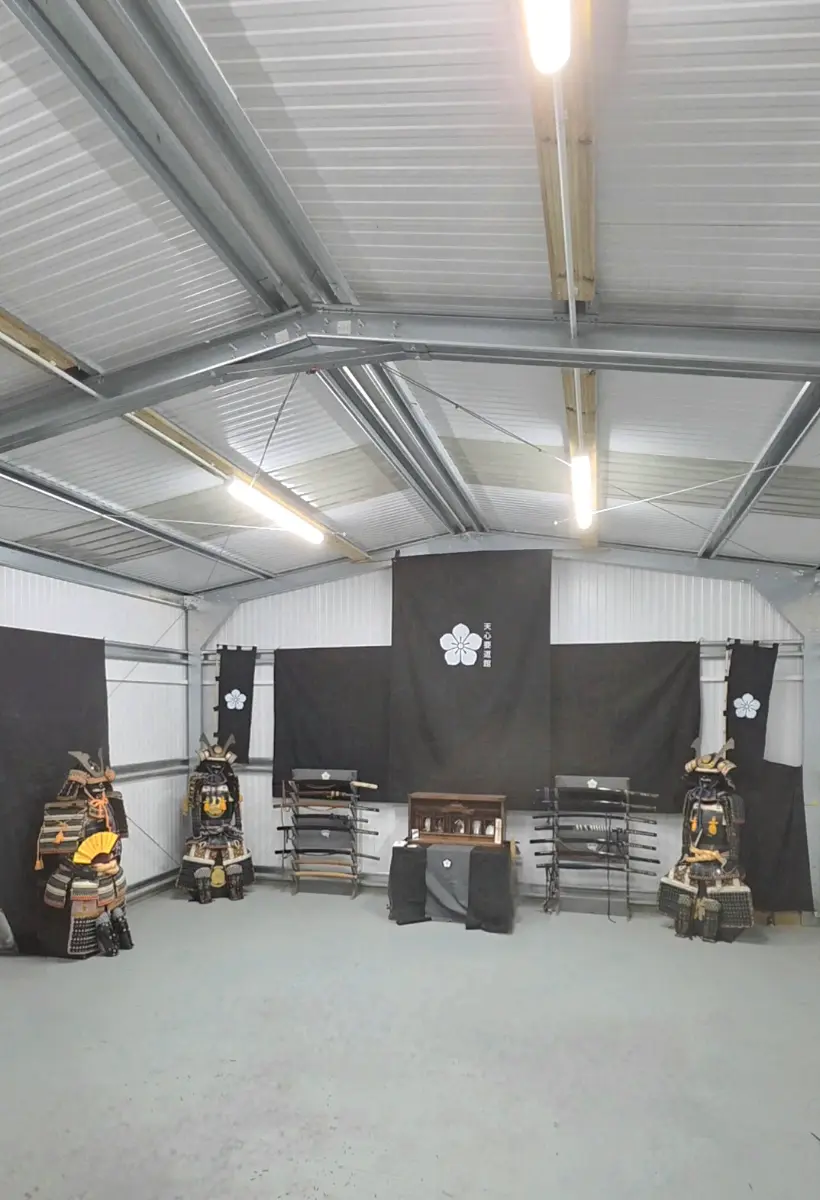
During 2024, with the help of a dedicated student and friend, we began constructing a prefabricated insulated metal dojo space specifically for advanced tameshigiri practice. It required groundwork, assembly, and sustained effort. It was built not for display, but for responsibility.
In December 2025 — The last keiko of the year was held within that space, marking not only the close of a year, but the culmination of sustained effort.
By this time we had managed to source and secure more tatami mats.
Technically, 2025 became a year of refinement.
I moved into thicker rolls, denser cores, and closely spaced targets demanding exact hasuji and disciplined maai.
Advanced study centred upon:
Mizu gaeshi — redirection without collapse.
Kawasemi — sharp entry with immediate recovery.
Nuki uchi — draw and cut unified seamlessly.
The wakizashi became integral to this refinement. Its shorter length demanded clarity and exposed hesitation immediately.
By this stage, a meaningful portion of the dojo stood at 1st Kyu level. The group remained small — yet abilities increased significantly.
2026 — Integration
A further tameshigiri seminar is scheduled for 2026, continuing the cycle of refinement and shared study within the dedicated cutting dojo.
By this stage, striving has given way to integration.
There is no desire to reinvent lineage — only to embody it fully.
The foundations laid by Masutaro Otani, Kenshiro Abbe, Tomio Otani , Tudor Box and Mike Selvey remain pillars. My role is not alteration, but continuity through lived practice.
Where once I sought approval, I now seek clarity.
Where once I repeated, I now interpret.
Where once I followed, I now lead — yet still walk the same Way.
The Misogi of 2026 reflects steadiness; and the haiku I wrote compliments it. ~
'Winter torrent thunders,
His breath steadies like stone.
He bows, unburdened.'
Continuity
The years from 2021 through 2026 were not defined by ease.
They were defined by resolve.
Opening in uncertainty.
Training alone when necessary.
Continuing personal study while building independently.
Innovating under material shortage.
Harvesting and preparing targets by hand.
Nurturing a small but committed group.
Guiding students to 1st Kyu standard.
Deepening the blade.
Refining the self.
The lineage continues not through preservation alone, but through living practice.
Old in spirit.
Modern in expression.
Unbroken in transmission.
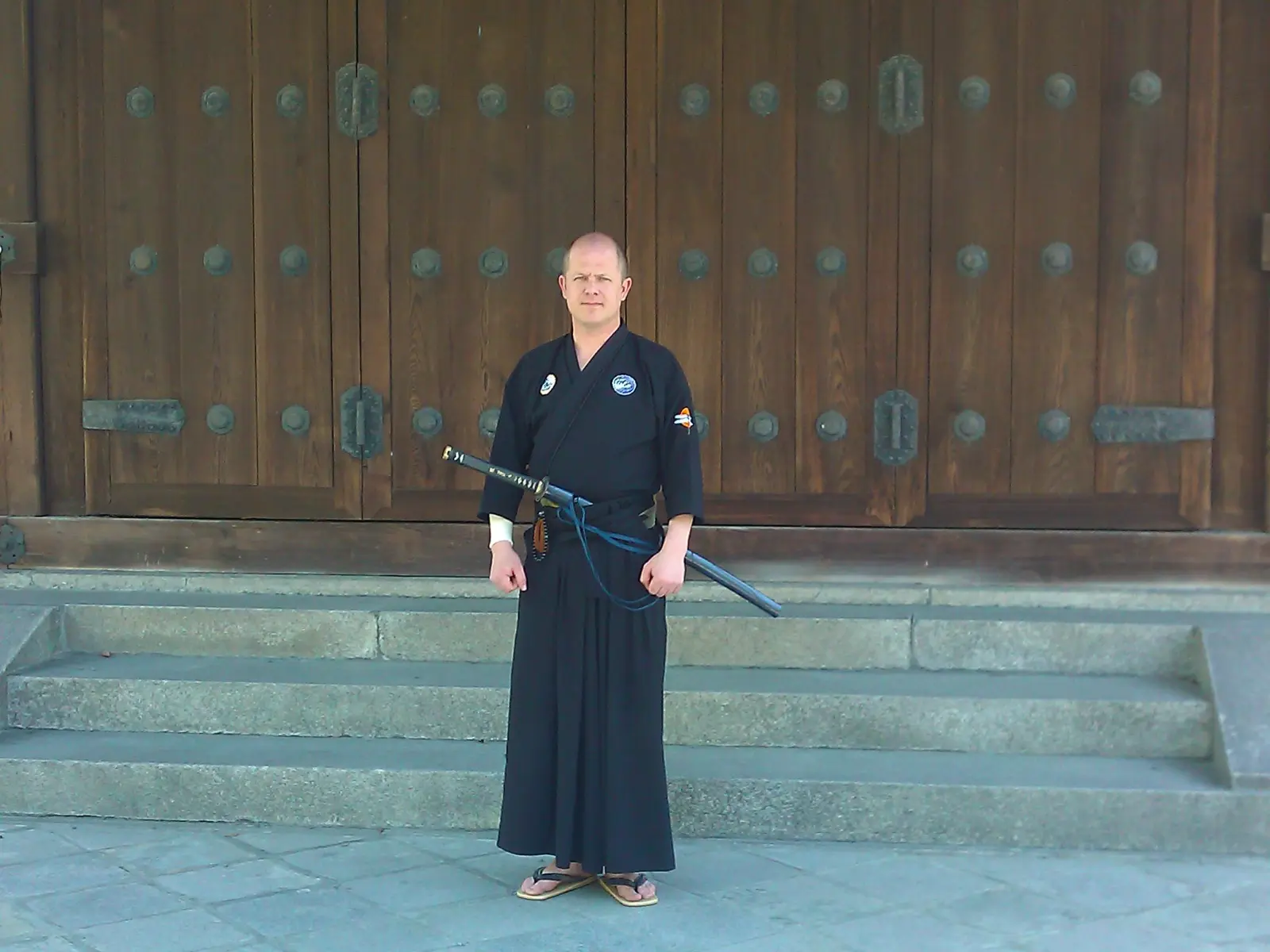
Butokuden Kyoto Japan 2012
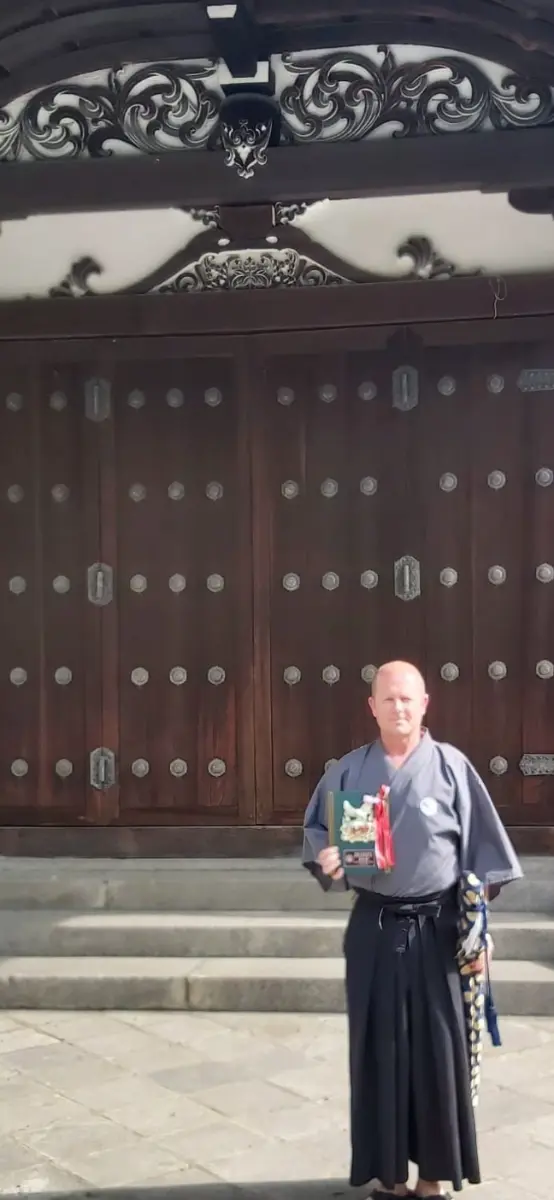
Butokuden Kyoto Japan 2023
© 2026 Stuart Knight / Tenshin Dojo. All rights reserved.
No part of this website may be reproduced, copied, or distributed without written permission.